2010-05-10

Snubbed and welcomed

I seldom sleep well on trains (on the occasions I have it usually has turned out that due to a derailed train ahead we’ve been standing still in the middle of nowhere for several hours) so was up well before the waking-up signal the next morning, but showers do wonders even in the most dire circumstances. The DB breakfast pack was not cœliac-adapted, but at least I got a hot cuppa, which I greedily drank (let’s face it, the quality of tea was not encouraging thoughtful sipping) while watching Lorraine/Lothringen roll by outside. Just inside the border is a town with the quite Teutonic name Forbach which is dominated by the Schlossberg, on top of which was a turret proudly flying the French flag. Thanks to the EU, no longer was anyone interested in checking our passports at any border crossing.

TGV at Metz VilleWe arrived in Metz at 06:15 and had half an hour to wait for the next train in the very impressively sculpted station. At 06:50 our TGV pulled away at high speed towards Paris. Laptop users on TGV get one dedicated seat with a power outlet situated next to the lavatory. We hove into Gare de l'Est at 08:19 and then descended into the Métro to get to Gare de Lyon via Bastille. (You all know of the English king who spent so much time on crusades in the Mediterranean he was known as Richard Gare de Lyon?)
Métro at Gare de l'EstMétro at Bastille


TGV at Gare de LyonAt Gare de Lyon we tried to procure breakfast, but here, too, breakfast was all bread-based. A packet of crisps had to substitute. At 09:46 our next duplex TGV left the station. As we travelled southwards the flat landscape began to undulate, steadily gaining in amplitude until becoming proper mountains in Provence.

We arrived in Montélimar at 12:35 in pleasant sunshine. The plan was to visit Le palais de bonbons et du nougat.

Our first disappointment was that there was no luggage deposit at the station, so we would have to tug our bags along. The second was that there was no tourist information either, so we couldn’t find out how to get to the candy palace. (Note to self, always save the Google road map before leaving on travels.) But of course, we could just take a taxi. Of course, the taxi stand was empty. After a while a taxi turned up and dropped someone off at the station, so I politely inquired whether the taxi was available. Without actually answering this the driver firmly requested us to go the taxi stand. Then he drove away, never to return, still pointing us at the taxi stand. Neither did any of his colleagues seem to appreciate the vicinity of the railway station, as no taxis could be seen anywhere. After a bit of indecisive milling about we got the bright idea of going to the nearest hotel and ask for advice.
The receptionist explained that the museum actually was just ten minutes walk down the road. Excellent!

In fact it took closer to an hour. We had already given up and intended to ask for directions back to the town centre when we realised the building in front of us was the sought-after museum. The receptionist there was friendly greetings personified, took care of our bags and gave us each a fistfull of candy along with our tickets. And, the premises were air-conditioned, which by that time was a major blessing.

The museum was an interesting experience. As befits the international museum of sugar refineries we were introduced not only to the history of sugar ever since the Egyptians but also were cheerfully told of the vital function of sugar in our bodies, not only is sugar good, but it actually keeps you alive! There was some quite impressive sugar art as well as a wall of (French) nostalgia in the form of a history of candy brands and their advertising. I was quite surprised that many well-known brands are a hundred years old or more. Possibly the pièce de résistance was The World’s Largest Piece of Nougat, a block well over a cubic metre, weighing about 1300 kg. We thought it was a horrid waste of good candy.

The adjacent nougat factory seemed half-empty, possibly because we had arrived just during lunch. The candy store was on the other hand quite full of candy. Behind it was a little toy museum. I was quite taken by the (copy of) a 3500 year old Minoan toy horse with wheels so that it could be pulled along behind you. There would have been a little toddler long ago, trying to both walk forward and watch the little horse behind to make sure it came along. Oops! There he fell over!

We decided it was time to get back into town and get something to eat, so we returned to the entrance and asked the receptionist how to best get back. “Oh! You go out there and then turn left after the military surplus store and follow the little path to the other side and there is a bus stop there.” Honeybuns thought this sounded very dubious, but I am a trusting soul and led the way up the little path and shortly we did arrive at a bus stop and shortly thereafter the bus arrived too and took us straight back to the railway station.

Now, to get some food. By the park there was any number of eateries, so let’s just pick one that has good vegetarian options. We plopped down by a table and ordered food. Sorry, only bar, no food until 19h. Oh? We looked around and realised that none of the people sitting at the tables were actually eating anything, but were drinking beers and similar stuff. Bah! Let’s find a food store then. We walked on through the shopping district, lugging our bags. Eventually we did find a food store—which was closed on Mondays. In desperation we turned back towards to railway station when we happened upon Star Kebab which was open and did serve food and did serve a large selection of good and plentiful food. Forks up!

Local train in MontélimarHappily refreshed we walked back to the station, where eventually we could catch the 17:45 to Avignon. Seemingly a simple local train, but a double-decker and with power outlets by all seats. I divided my time between letter-writing and watching the mountains grow ever craggier and the Rhône flowing by.

Mountains across the RhôneWe were in Avignon an hour later. An historical town, but we barely had time to buy and write a couple of postcards and then catch the shuttle bus to the TGV station. (Our Interrail cards were not valid on the bus.)

Avignon Gare TGVWe left the futuristic TGV station in Avignon at 19:59 and arrived in Aix-en-Provence just 20 minutes later where we were met by our friend Johan. We bundled into his car and drove through the Provence countryside to Rians, where he lives in a several-hundred-years-old house utterly bereft of straight lines, right angles and equal distances. After a light supper we fell asleep in this strange house in a strange country under a warm IKEA blanket.

2010-05-09

And now for something completely similar

To get you in the mood for the next few posts, here is some Monty Python:


Honeybuns and I had been invited to see a friend in France and eventually managed to pull it off, subject to the constraints of our respective work schedules, the cat minder, our host, the things we wanted to see, the railway timetables and that we had to make our bookings rather late in the game.

X2000 at København HSo, at 08:21 we were on the X2000 towards Copenhagen. Electricity and Wifi onboard.
København H was as usual freezing cold and we had the usual two-hour stop-over due to the defensive SJ ticket policy. We had some Levantine junkfood at Shawarma House (not bad as such) and loafed around, waiting for our InterCity Express connection to Hamburg.

ICE in CopenhagenThe train left on time at 15:45, but had no power outlets. It had a bistro that was able to procure good and plentiful (pre-packaged) salads, though. We also got a ride from Rødby to Puttgarden on M/F Deutschland. The chilly weather was not very conducive for staying out on deck, though.

Intercity in HamburgWe only had a 10-minute layover in Hamburg—a length of time I prefer, at least when the trains are on time. Our change was to an InterCity train of older style. It had power outlets at certain seats only, not ours. The seats themselves made their springs distinctly felt in our backsides, and the car felt distinctly dusty. Fortunately this would be a fairly short hop, 20:28–21:59. I noticed with some interest that on the track next over was a City Night Line train, stopping at Hannover, certainly that wouldn’t be the train we were supposed to get on, or if so, why couldn’t we get on it already here? We read our books and rode through the darkening evening. Even though the train was fairly long, there were only a few passengers along, but maybe the cars needed to be transported somewhere anyway.

In Hannover we again found the same CNL train on the track next to ours, and indeed it was the train we were to continue to France in. But! the car we were supposed to be in wasn’t there! However, on the next track over we could see sleeper cars that were marked as stopping in Metz. What now? Soon a shunting engine turned up, pulled away the cars and eventually returned to attach them to the waiting rest of the train and we could board our car and clamber into our berths as the train pulled away towards France at 22:16.

2010-05-04

Confused laughter

My old friend Erik sent me this link and I had to read it several times.

Yes, it is a real Microsoft page. Yes, they carefully explain how to become competent in using humour. With a development plan. And testable proficiency levels from “Basic” to “Expert”. With a reading list. And without the slightest attempt at levity.

So do the authors lack humour from the outset, or did a committee carefully go through the text, removing any “untimely or inappropriate humor”? Or is this an elaborately set-up meta-joke, poking extremely satirical fun at the perceived lack of humour of Microsoft? My head spins, I feel like laughing, but don’t know if I dare to.

2010-04-30

Veckans ord: stolslagen

Att segla på S/S Karaboudjan kan visa sig vara en stolslagen upplevelse.

Styrman Allan spöar besättningen

2010-04-28

Sproing!

We’re past the vernal equinox and the pet plants are racing towards the sunlight.

Hippeastrum in bloom

Growing garlic

Venus flytrap seeking the sun

2010-04-16

Ukuleles

The Ukulele Orchestra of Great Britain are currently on tour in Sweden and I took the Posse to their concert at Scalateatern, which was a great hit. Early in the first set they played their version of “Life on Mars”, which I’ve always been fond of. Later on Hester Goodman sang “Shiver me timbers” most beautifully. I frequently wished I'd been able to pause, rewind, and single-step the performance to see how on Earth they managed to get all those sounds out of their instruments.

The audience managed to wring two extra numbers out of the Orchestra and then they graciously signed CDs and DVDs in the foyer. I suggested they should cover Albatross, which they apparently had been thinking about as well. Remember, you heard it here first.

On the way home I mused that just as you have sing-alongs on concerts, you should be able to do play-alongs, but of course, they have already done exactly that:

Veckans ord: rafsset

Min normala klädsel är rafsset – det jag rafsar ihop ur klädlådan.

2010-04-15

Taram, taram, taram…

Back when I was an undergrad, the Maths department’s interface with the students was a little man universally known as “The Lightning”. (The Only-Begotten Children’s Mother reported how shocked she was when she many years later found out he actually had a perfectly normal name as well.) The reason for this sobriquet was soon made amply clear. Picture a queue of perhaps 300 students snaking down the stairwell outside the student office of the Maths dept, all out to buy the necessary textbook for the Analysis course starting that day. Eventually you get to the front desk and The Lightning curiously asks what you want. You declare that you wish to buy Funktioner av en variabel, textbook and exercises. “Oh!” quethes The Lightning and shuffles off to the book shelf at the back of the room, picks up the two books, returns to the desk, takes your money, counts out change and carefully makes an annotation in his cash ledger that he has sold Funktioner av en variabel, copies: 1, and exercises, copies: 1, @ 180 SEK. Then he raises his head, looks at the next person in the queue and inquires what he might be there for. Repeat for all students, repeat for all courses.

The Lightning eventually shuffled off this mortal coil, but I must now have run into his nephew: Honeybuns and I are preparing for a train trip again, and with the help of Die Bahn I had prepared an itinerary with all stops and connections and just needed to make the bookings. Unfortunately international travel cannot be booked on the Web, and I’ve found it impractical to do over the phone, so down I went to the Central Station to handle it in person. When I got to the ticket counter, I laid out my papers and explained the route. The gentleman behind the desk then had to look up each leg and make seat reservations and it went something like this:
Me: “…and from there we continue to Avignon, with the 18:14 connection…”
“Which day was this?”
“The same day.”
Clicks and then searches the keyboard.
Me, being helpful: “That’s A V I G N O&hellip”
“Wait, wait. A?”
Me, timing the letters with his hesitant single-finger typing: “A…V…I…G…N…O…N…”
“And this was when?”
“18:14…”
“Right, there it is. OK, wait a bit.” He clicks and then pads off to the other side of the office to the printer, retrieves a paper and puts it on the counter. “OK, now I have the train number, I’ll see if I can make a reservation…” More hunting and pecking. “Yes! It went OK.”
“Right. In Avignon we change to the 19:59 service to Aix-en-Provence…”
“Wait, wait.” Refocusses on the screen. “Which day was this?”
“Still the same day…”
“The tenth?”
“The tenth.”
“And where to?”
“Aix-en-Provence, that’s A…I…X&hellip” Etc, etc, with an unhurried excursion to the printer for each step of the way.
An hour and a half later I finally had the thick sheaf of tickets and had also missed the modelling meeting I had planned to attend. I don’t think it should be necessary for RyanAir to go into train travel to make it more efficient than that.

2010-04-09

Word of the week: awaylable

Thanks to my mobile phone clients can reach me even if I’m not in the office, I’m awaylable.

2010-04-05

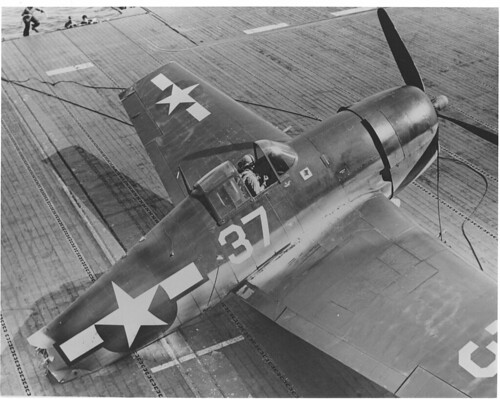
I thought this just happened in comics…


These are two different Hellcats, so clearly getting one’s tail torn off happened on more than one occasion. At least in the second case, things seem to have worked out all right.

2010-04-04

More war

Martin R, ever supplying me with MÖP material, a while back forwarded me a then new book from Gyldendal: Danskere i krig 1936–48 (Danes at war 1936–48), edited by Rasmus Mariager.

Finland and Norway have never doubted they did the right things during the Second World War, they fought against overwhelming force and acquitted themselves well under the circumstances. That Finland fought alongside with Nazi Germany is considered OK, since it was against bolsheviks. Sweden and Denmark have a more troubled relation to their history, was their collaboration with Nazi Germany necessary for survival or was it due to national spinelessness?

This book studies how Denmark was affected by the conflicts around the time of the Second World War through the examples of a few Danes who took part in these conflicts.

The first chapter is about Leo Kari, a volunteer on the Republican side in the Spanish Civil War. Now, Morten Heiberg’s text actually does not say very much about Kari, but rather discusses the political situation in Europe around the time of the war. Much of it was new to me, apparently sources unavailable during the Franco period are only now being explored, even if few eyewitnesses are left anymore.
The Spanish Civil War was a time of intense political manœuvring and positioning, with allegiances shifting over time. For example, at the time Germany and Italy were not yet formal allies, but rather rivals, so that Germany saw it fit to sell arms to the Republican side, partially in order to bring in some cash, but also so that the more numerous Italian forces on the Nationalist side would be, eh, culled. The side-effect that German participants might end up being shot with German weapons was an acceptable price. Since the Western Powers did not allow arms trade with Spain, all weapons had to be smuggled into the country, preferrably with the help of Greek merchants and ships. My reflection is that the enormous economic upswing this caused in Greece may have been an additional reason for the now-allied Germany and Italy to invade Greece some years later. The Spanish government’s arms purchases completely spent the Spanish gold reserve, which had been the fourth largest in the world.

The next chapter tells the story of Hans Fenger. When Finland was attacked by the Soviet Union in 1939 this caused dismay all over Europe and with surprising speed various help actions were organised. In Denmark many wanted to volunteer to fight on the Finnish side, but the Danish government decided this would be a breach of Danish neutrality and forbade its citizens to take part. Many managed to travel to Finland anyway, among these Fenger, even though he was an officer on active duty and thus formally guilty of desertion. Fenger travelled through Sweden to northern Finland where the various volunteers were organised and got initial training. In particular he had to learn to ski. Eventually he managed to get to the front where he got killed in his unit’s first skirmish. His body was brought home to Denmark and given a hero’s funeral. When the other Danish volunteers returned to Denmark everybody agreed to at most slap their wrists for their desertions, as they had after all defended the Danish national honour. Interestingly enough the authors Ahtola Nielsen and Kirkebæk seem to imply that Finland probably would have been better off acquiescing to the original demands by the Soviet Union than going to war to defend its territory, even though one would think that the fresh experiences at the time would have suggested this was not a sustainable strategy.

Mere weeks after the end of the Winter War, Denmark was invaded by Germany. Resistance being considered futile, Denmark capitulated with nary a shot. The Danish government then for several years continued a policy of not rocking the boat and trying to getting along with the occupational forces. This was by many felt to be humiliating and a blot on the Danish escutcheon. Paradoxically, this led to many enrolling in the German armed forces, to show that Danes could fight. In line with the policy of not giving the Germans any excuses for being dissatisfied with Denmark, Danish citizens, including military on active duty, were freely allowed to join German forces. The about 6000 Danes that did, did so for many reasons, not least of which was that signing up promised food for the day. Many professional soldiers joined up to get a chance to practice their métier and then there was a large contingent who politically aligned with Nazism, among those the subject of the next chapter: Per Sørensen. He was a Danish officer who joined the Waffen-SS and made a spectacular career before getting killed defending Berlin a few weeks before the end of the war. The authors Bundgård Christensen, Bo Paulsen and Scharff Smith point out that since all SS units committed war crimes, there is no reason to assume Danish SS members did not also do so, even though little documentary material on the Danish units exists. After the war, all Danes who enrolled in the German forces were retroactively declared criminal and in many cases sent to prison for longer or shorter periods.

A number of Danes, mostly those who were abroad at the time of the German invasion, but also a few who managed to escape from Denmark, joined Allied forces. Werner Michael Iversen was a Danish ex-soldier and merchant who acutely felt the necessity for Danes to join the fight and eventually liberate Denmark and thus worked hard at forming a Danish recruitment office in London and build up a Danish unit within the British Army. This was not entirely uncontroversial among exiled Danes in Britain, many who felt they should not get involved, not least to protect family members still in Denmark. Others agreed they should join up and many of these passed through Iversen’s recruitment office. The most promising ones were silently passed on to SOE to become secret agents in occupied Europe. Eventually though, not least due to Iversen’s abrasive and self-important personality, he was taken out of the loop and the recruitment office closed somewhat later.

After the war ended in Europe, grateful Danish volunteers offered to enlist in the British Army, at first to join the war in the Pacific, but after Japan’s capitulation wherever else His Majesty’s Government saw fit to use them. Britain hardly could refuse this gesture and out of about 11000 volunteers, 2500 were selected to serve in the British Army, most in various parts of Asia. Per Christensen was one of these. He ended up mostly serving on guard duty in the Far East, but other Danish units were used for policing in Palestine and India, both subject to civil unrest at the time. The Danish volunteers came home in 1948, when most had already forgotten about them in Denmark.

The final chapter by Ib Faurby puts all of this in context and how the foreign and defence policy of Denmark had been formed by its relations with Germany ever since the Napoleonic wars, Schleswig-Holstein being conquered and reconquered, but history eventually making Germany a Great Power and Denmark a small country that needed to keep good relations with its southern neighbour (Sweden by this time having dropped its traditional enmity with Denmark). Still, Danish volunteers have taken part in various wars and conflicts all through the 20th Century, shifting alliances causing the volunteers to sometimes fight alongside each other and later against each other.

So, what was my impression of the book? Well, it seems a slightly haphazard collection of various essays that did not necessarily form a coherent whole, and the use of select individuals (because they have left at least some amount of written material behind) as symbols of various subjects does not, in my opinion, work very well. Faurby’s wrapping-up chapter gives a much needed overview, unobscured by the minutiæ of the life stories of individuals. In the same way Heiberg’s overview of the context of the Spanish Civil war works well, and the few paragraphs about Leo Kari could have been easily excluded without losing any of the informative content.

The book ends in 1950, when Denmark joins NATO, as if Denmark just returned to its Sleeping Beauty status, but of course Danish volunteers have continued to serve in wars, now latest in Afghanistan.

2010-04-03

So it seems…

You are a

Social Liberal
(73% permissive)

and an...

Economic Liberal
(16% permissive)

You are best described as a:

Socialist


Link: The Politics Test on Ok Cupid

2010-04-02

Veckans ord: påskärring

På det hela taget låter det amerikanska “bag lady” bättre än det brutalsvenska ”påskärring”.

2010-04-01

Packet pigeons

RFC1149 is a well known April 1st joke on data communication via carrier pigeon, but of course you can't have a standard proposal just lying around without a test implementation, which the Bergen Linux User Group has done.

2010-03-28

Living in a 2D world

The archetypal way of advertising 3D monitors is by showing an object protruding past the frame of the monitor:
Philips 3D monitor

The problem is that this is the one thing you just can’t do on current 3D monitors—the entire effect is dependent on two images being displayed (simultaneously or in close succession, depending on the exact technology) on the monitor. Outside the frame there is nothing to display, so no image, and no 3D effect. For the best effects you want the viewers watching the image from straight ahead (not way off to the side, as shown in the pictures) and towards the centre of the screen, without moving their heads too much. That way you minimise the perspective distorsions, out-of-focus images and perceptual artefacts by the borders, where the stereoscopic effect breaks down.

But of course, in a printed image, how else would you indicate that there is something special with the screen—directly photographing the stereoscopic image would just show a non-marketable blur. (This also means that the resolution in the print image often enough has no relation whatsoever with the actually achievable resolution on the screen.)

Moral: check out the items in person, don’t go by the pictures.

2010-03-19

Veckans ord: utskällningsobjekt

Basil Fawltys bil blir ett utskällningsobjekt:

2010-03-12

Veckans ord: grenkontakt

Det brudparet önskar sig allra mest är grenkontakt.

2010-03-07

Saturday Night Special

We were so pleased with our previous visit to Utö that we already then decided we’d return in the wintertime and booked an Archipelago Weekend.

Saturday morning broke with brilliant sunshine from a cloudless sky glittering on fresh snow and we got out the door in high spirits. This time of year there is no ship connection all the way from Stockholm to Utö, instead we had to take the train to Västerhaninge, make a quick sprint to bus 846, which is supposed to leave at the same time as the train arrives at the station, and continue on to Årsta Brygga. Waxholm II was waiting for us at the jetty.

Passing islands in the iceIce and snow.
We crunched our way through a channel of broken ice, passing very secret military installations and a couple of deer running on the ice without any Bambi problems and soon were at Utö.

A birch with a bendSummers are short: Presumably a bird was flying by just as the tree was growing, so that it had to give way.
When we had checked in and checked out our spacious (though still rather cold, as the season had just started) room we went out for a walk. The little group of houses by the harbour, shops closed for the winter, was soon behind us and we found ourselves in a forest where, when we stopped, all that could be heard was little clumps of snow falling off branches and the wind like the sound of a train in the distance.

Spinach soup with mushroom omeletteThis is not your father’s spinach soup.
Eventually we were hungry enough that we returned to the inn and a delightful lunch. After lunch we trudged in the snow up to the old windmill and then across the island to the nearby swimming cove. When we returned we found we’d covered two kilometres in as many hours. We decided it must have been good exercise. We returned to our room to dry our snowy clothes and rest a bit. We saw an episode of Merlin and groaned and moaned at the anachronisms and the hackneyed dialogue. The reason for Honeybuns’ big bag was made clear to me as she changed for dinner. I felt very scruffy in comparison.

The dinner was every bit as excellent as the lunch, and specially made for us. We got our favourite corner table where we could look out over the sea and see the lights of the mainland in the far distance. After dinner we sat in the big leather sofas in the lounge and read the books we’d brought. Eventually we walked and slipped down the hill under the starry sky to our room, where we soon fell asleep.

Electricity and WLANThese days, mooring your sailboat requires not just electricity but also WLAN.
The morning was overcast and foggy but we got up early for breakfast and dawdled an hour or two over it. Then we went to explore the harbour and the road in the other direction. Another excellent bespoke lunch, with ingredients we’d never seen in combination before and then we had an hour to relax before our ship came in. This day the sound as it moved was slushier.

On the way we passed what seemed to be the carcass of a yearling elk on the ice, picked at by ravens. At least they would not have to starve for a while.

2010-03-05

Today, 67 years ago — V

My copy of Friday’s paper is incomplete, but here are some of the news reported:
  • Japanese troop transports en route to New Guinea have been sunk with horrendous losses of life in the Battle of the Bismarck Sea. [To make sure that no Japanese soldiers would get to their destination, US ships were ordered to machine-gun survivors in the water.]
  • The thaw is turning the Eastern front to mud. German troops are encircling a Soviet army near Charkov, but Soviet forces are pushing back the Germans along the front from Ilmen to Orel. British commentators see this as a sign of the Germans pulling back forces in order to prepare for an Anglo-American invasion.
  • Hard fighting continues in Tunisia.
  • Both British night bombers and US day bombers have bombed German targets the previous day.
  • While the German bomb raid against London was very limited, 178 people were killed when a woman stumbled in the stairs to an air raid shelter and the crowd rushing in from the street fell over her.
  • Sweden harbours some 13000 refugees, of which 9000 from Norway.
  • Professor Linkomies has managed to form a new Finnish government, which is presented. [This government would make several peace offers towards the Soviet Union during the following year, but Soviet counterdemands were deemed unacceptable.] Foreign editor Johannnes Wickman analyses the political situation Finland has ended up in, rather critically. Having aligned with Nazi Germany is not an optimal choice.
  • The tradition of called-up conscripts turning up dead drunk must stop.
  • Zarah Leander’s Berlin house has been bombed and she moves back to her manor in Sweden.
  • Nancy and Sluggo continue their metall collecting—even in the haunted house. The mountain lion turns on King’s would-be saviour, a shot is fired…
  • LM Ericsson’s burglar alarms automatically call the police.

A reaction I've had when reading these old papers is that news travelled surprisingly fast—reports from the other end of the Earth are there in the next day’s paper, implying that transoceanic phone cables remain active in spite of the war or that news bureaus have access to radio communications. Very little effort is spent on layout: the news items wrap around the ads, necessitating a search for where on the page a broken column continues, with no visual indication thereof. Many articles are pseudonymous, even though most readers presumably know who’s behind the signature.

Veckans ord: matochist

Jag äter gärna kryddstark mat även om det gör ont i munnen, jag är matochist.

2010-03-04

Today, 67 years ago — IV

The pick of the day’s news:
  • Luftwaffe attempts a raid against London in retaliation for the “Jewish air terror” the night before, but are forced back by intense AA fire.
  • Hitler has proclaimed that all Jews in Europe will be finally exterminated. Das Schwarze Korps considers this a just punishment for the Jews having started World War I.
  • German troops have retreated at Demyansk and Rzhev faced with overwhelming numerical superiority. German forces however advance at Slavyansk. The Germans also retreat in Tunisia, chased by British troops.
  • The Royal Navy has built 900 ships since the beginning of the war, reports First Lord of the Admiralty Alexander. US Secretary for the Navy Frank Knox warns that the US Navy has to expect personnel losses of ten percent.
  • Only 10% of the Swedish people expect the war to last two more years. Axis propaganda argues that time is on their side, as the Allies surely cannot hold out much longer.
  • Hakkila was not able to form a government either, now Edwin Linkomies gets the chance.
  • Touched by the letter from the sailor’s widow, an anonymous donor gives a large sum to the National Fund for the Victims of the Sea War.
  • Zarah Leander’s latest film Damals is a great success at its Berlin opening. Greer Garson receives an Academy Award for her role as Mrs Miniver. [Her acceptance speech was the longest ever at 5:30 minutes.]
  • Svend Asmussen has been forced to cancel his tour in Sweden as he has been denied an exit visa. His orchestra has received their permits, but won’t leave without him.
  • Burglars have attempted to steal clothes at Helgagatan 36 but been frightened and left with only a pair of boots.
  • 70 participants have already registered for Vasaloppet the following week. [In 2010 the number of participants is 56000.]
  • Nancy and Sluggo continue to steal scrap metal on behalf of the war effort. King realises his gun is unloaded but one of the suspicious-looking figures from before turns up at the last moment with his rifle.
  • Cederroths introduce delicious Cedrox carrot flakes.

2010-03-03

Today, 67 years ago — III

The pick of this day’s news:
  • RAF bombers have undertaken the largest raid yet against Berlin. No Swedes have been injured.
  • German and Soviet forces both advance on different front segments. Likewise both Allied and Axis forces gain smaller victories on the North African front.
  • Italian troops are brought home from the Eastern front. On the other hand up to 2 million Italian workers are to be sent to Germany to work in the war industry.
  • The leader suggests that Social Democratic arguments for the necessity of German troop transports through Sweden are disingenious and that said transports should be stopped immediately.
  • In a surprise development Speaker of the Parliament Väinö Hakkila will establish the new Finnish government. The issue of a separate peace in Finland is a hot topic everywhere except in Germany, where the mere idea of an ally throwing in the towel is unthinkable. [Finland fought on for another 18 months before being forced to sue for peace.]
  • HMS Sussex is reported to have sunk an enemy tanker [the German supply ship Hohenfriedberg] but could not stay to pick up any survivors due to intense U-boat action.
  • A rally in support of European Jews has been held in Madison Square Garden. A treaty has been signed between Great Britain and Bulgaria, allowing 8000 Bulgarian Jews to emigrate to British Palestine. [This emigration does not seem to have taken place.]
  • 150 Norwegian political prisoners are transported to Germany. [At least the ones mentioned by name did survive their ordeal.] A dozen persons hijacked a Norwegian passenger ship and set course for Britain, but were sunk by German aircraft.
  • Japanese POWs riot, 48 are shot to death.
  • The parliamentary savings commission suggests a number of points where public expenses may be decreased. The commission even dares question alcohol rationing, the bookkeeping of which costs 2.5 MSEK a year.
  • A “picture telegraph” connection between Stockholm and New York has been inagurated, minimum cost is 300 SEK per picture. (Remember: that’s about the price of a radio set.)
  • A Siemens electron microscope has been ordered for Uppsala University for the study of viruses.
  • Mahatma Gandhi breaks a 21-day hunger strike, yet without having been released from prison.
  • Alexandre Yersin, discoverer of the plague bacillus, has passed away at the age of 90.
  • KSAK collects money for the upkeep of an orphanage for the children of killed Finnish flyers.
  • The stormy weather has caused many accidents and fires and several trains have been damaged and railways blocked by fallen trees and debris.
  • Due to the unsteady weather conditions, waxing has been an issue in the recent ski competitions in Östersund: “Waxing is a problem and seems to remain so until skis are made of some new and so far unknown material.” [Well, even with modern materials, correct waxing is paramount in competitions.]
  • The telephone exchanges in Bromsten and Spånga will be replaced by automatic units later in the week.
  • Nancy continues to collect scrap metal and the mountain lion finally jumps at King.
  • A.-B. Aerotransport proudly proclaims their role in getting the national football team to Berlin the year before.
  • Ragnar Frunck is already at it’s classic address at S:t Eriksgatan, but hasn’t begun selling saunas yet. Bahco on the other hand present a kit for turning your bathtub into a sauna.
  • Buy the photo-copying machine Rectophot from Oscar Sundin.

2010-03-02

Today, 67 years ago — II

The pick of the day’s news:
  • A small item reports the bombing of Norsk Hydro’s Plant in Rjukan. It is noted that while owned by I.G. Farben-Industrie, Marcus Wallenberg is chairman of the board for the plant. [The significance of this attack was not clear at the time, DN assumes that the target was the production of nitrogen compounds used for explosives. In fact this was Operation Gunnerside, which successfully stopped the production of heavy water intended for the German nuclear weapons programme.]
  • The re-elected president Risto Ryti swore the oath of fealty to the constitution on the Monday. In his installation speech he underlined Finland’s desire for peace, but that there had been no other option but to go to war to defend its independence and no end was in sight. This is considered insufficient to gain the favour of the United States in future peace negotiations. A new government had not been appointed yet; Tyko Reinikka was a possible candidate for the post as prime minister. At the same time a Soviet attack by Rukajärvi was routed.
  • Soviet troops have gone on the offensive near Lake Ilmen and after a week’s battle forced back the Germans. The Germans report they have repelled Soviet troops by Donets.
  • The Soviet government refuses Polish demands to return Soviet-occupied areas after the war on the grounds that those belong to the Ukrainian and Belarussian peoples.
  • The latest bomb raids on Germany suggest that British and US bombers will soon be able to conduct around-the-clock bombing campaigns in preparation for the eventual invasion of the continent. No Swedes have been injured in the bombing of Cologne.
  • 250000 additional French workers will be called to the German war industry.
  • Japanese forces prepare an offensive against Australia, seemingly undaunted by their losses in the Battle of the Coral Sea.
  • The Royal Navy has over the course of the last few years raised sunk ships in order to reuse the steel. The amount of metal retrieved up to now corresponds to 12–20 new cruisers. The latest ship raised is HMS Caledonia. [Interestingly enough originally built as SS Bismarck by Blohm & Voß.]
  • Both Churchill and Roosevelt have recovered after respective periods of ill health.
  • The earlier mentioned new rationing cards will be handed out at a number of places around Stockholm, predominantly schools, starting the next day.
  • Applicants who can prove their tobacco consumption will get increased tobacco rations in exchange for their coffee/tea rations. [It would probably go against the grain of something to be allowed to choose between tobacco and coffee, you have to apply for it or society will crumble.]
  • The demands by the Chief of the Air Force for a separate military weather service are rejected by the State Meteorological and Hydrological Institute—there simply are no additional meterorologists to be employed, as the state has neglected training new ones for a long time.
  • A leader considers the National Board of Health’s treatment of Dr Befrits to be legally questionable, the matter seems to simply hinge on the lack of a registered midwife at his clinic.
  • The road to Anjan is unpassable due to several days’ blizzard. A number of tourists are snowed in.
  • A prisoner, arrested for vagrancy escaped during transport in Västerås. The escorting police officer fire several shots at the escapee, without hitting. The prisoner was eventually apprehended.
  • Amusement and dismay in Aalborg where the local prophet Gabriel Mikkelsen has announced the end of the world, which however has failed to take place. Mr Mikkelsen has made himself scarce.
  • Yesterday’s film openings are reviewed, most get favourable reviews, but Суворов comes across as a clichéd propaganda piece.
  • Södersjukhuset, Stockholm’s latest hospital has opened and is a wonder of modern medical advances.
  • An anonymous lady is upset and embarrassed that only worn, and well-worn at that, clothes are allowed to be sent as emergency help to Norway. A sailor’s widow suggests that collected funds rather be used to support widows and orphans than for the building of a memorial to dead sailors.
  • ELD has already been writing causeries on Namn och Nytt for a decade and will continue to do so for four more. This day he mentions the current debate on letting married women retain their maiden names.
  • On the comics page Nancy and Sluggo continue collecting scrap metal for the war effort and we find King being threatened by a mountain lion.
  • The two doctors on call for the inner city of Stockholm this night are announced, they can be reached by telephone.
  • Nordiska Kompaniet will demonstrate how to prepare good and nourishing vegetable meals.
  • Ljusne-Woxna AB advertise their ”Ljusne Board” with excellent insulation properties.
  • If the war is wearing you down, you should ingest PHOSPHO-ENERGON, prepared from healthy brain and nerve tissue. [Whose?]

2010-03-01

Today, 67 years ago — I

Martin R, the archaeologuy, found a stash of old issues of Dagens Nyheter and gave them to me. I have been reading them and it is now exactly 67 years since these news were published:
  • 17 Norwegians have been executed for sabotage actions. The Church of Norway (apparently in the hold of Nasjonal Samling) offers détente for non-collaborating vicars.
  • Schlesische Zeitung regrets that the public opinion in Sweden now supports the Allies. The unnatural peace policy of Sweden clearly has distorted its priorities, but SZ hopes Sweden will come around to the right side and support the struggle against Communism. On the other hand, conservative Sydsvenska Dagbladet suggest that, while occupied peoples might in principle oppose Communism, they have first hand experience of Nazi concentration camps, deportations, torture and executions and are fighting the evil they know rather than possible evil they don’t know.
  • Bulgarian Jews have been taken to four concentrations camps in the country, but the “worst elements” will be deported to special ghettos in Poland.
  • A Red Army offensive has been stopped by the German Army, 14000 Soviet troops are claimed to have been killed. Henry Shapiro reports from the liberated Charkov which has burnt to the ground by the retreating German troops.
  • Both Allies and Axis proclaim victories in North Africa. The continued Allied pressure on the North African front is a case for concern, says Dr Kirscher at Frankfurter Zeitung, but he is convinced that the Italians are willing to continue the war. [Italy capitulated five months later.]
  • More US citizens are killed by accidents than by the war. Total war losses, including POWs, are 66399.
  • Afternoon “tea dances” are prohibited in Stockholm. [Apparently this has been on the table for a while, as no background is given.] The youth of the city is expected to travel to surrounding municipalities for their Sunday entertainment. The signature Geman professes himself to be a ”swingpjatt” and verbally sketches the dancing youths with their funny nicknames. That they never consume anything stronger than lemonade is made clear.
  • Dr Befrits runs a private maternity clinic and refuses to close it, even though so ordered by the National Board of Health. The association of practising physicians supports Dr Befrits.
  • The Sunday (1943-02-28) was the warmest in a hundred years. The warm weather caused difficulties for the charity bandy match between Sweden and Finland in Helsinki and it ended 0–0. Back in Sweden Hammarby qualified for playing in Division 1.
  • There is always money for gambling, so horse races at Solvalla brought in 400000 SEK, and that’s in 1943 money.
  • Football was played in the UK, England beating Wales 5–3.
  • Tons of dead herring have been scooped out of the sea on the west coast. A mine explosion is the likely culprit.
  • All horse-owners have to report their horses and carriages (rubber wheels to be reported separately) to the authorities yearly, for the planning needs of the defence forces. The lack of rubber is also an important point in the main leader. Indigenous synthetic rubber is being developed, but Sweden is still dependent on imported German Buna rubber.
  • New rationing cards for additional rations of fat to children and teenagers.
  • Colonel Gyllenkrook has written a book on partisan warfare, guerilla warfare being well suited to the Swedish national character.
  • Herbert Tingsten suggests the Nordic countries should eventuelly join in a union. Atos Virtanen [sic] has argued for the same in a lecture in Gothenburg. [Wirtanen was betrothed to Tove Jansson for a period and is the basis for the character of Snufkin.]
  • Martin Allwood and others are elected to the board of the Peace University Foundation and plan for the future.
  • Reader’s Digest has recently started publishing a Swedish edition, which is felt to be rather too American. In particular an article on miracle treatment of polio is compared to a debunking of said treatment by Swedish experts in the magazine Nu.
  • John Wall exhibit “Technology in Miniature”. What might that be?
  • Poppens närande Buljong praise vegetable soup instead of surrogate coffee.
  • Konsum opens a new shop in Helenelund.
  • March is Danish book month; Swedes are exhorted to buy Danish books.
  • Namn och Nytt was a full two-page spread and at this time concerned with debating a proposed co-Nordic spelling reform. putt (pissed off) is revealed to have been only dialectally used in southern Sweden at this time. The Royal Academy of Sciences wants a prohibition against the import of calendars as it cuts into their income. As a result they cannot afford to publish scientific articles in Swedish scientific journals and they therefore have to be published abroad, which is a Bad Thing. [The mind boggles.]
  • På Stan on the other hand is just a single column, which today is about women’s magazines from different countries and their tips on how to repair and reuse clothes, and how to get the most out of available foodstuffs. Mazetti introduces a new egg surrogate.
  • A number of new films open: In Which we Serve, The Reluctant Dragon, Le dernier des six, In This Our Life and Суворов.
  • On the comics page we find Nancy, then still under the title “Fritzi Ritz”, collecting metal for the war effort, and King of the Royal Mounted, who is not visible in person in this strip, even though some nasty-looking bandits are.
  • There is one radio channel, broadcasting from 07:20 to 22:15. A TAKA-572 wireless set cost 320 SEK.

2010-02-27

Avatar

We have now seen Avatar. I can but agree with former reviews, the story is utterly trite (the protagonist starts with smaller challenges and keeps practicing until he’s ready to meet the Level 20 Boss) but computer generated actors have definitely come of age. I was shaking all over when the film ended.

Some random things that came to mind:
  • Jacking into the avatar is visualised with a fly-through of a winding tunnel of lights. This was clearly the effect they spent the least effort on, did they use someone’s screensaver for that?
  • But for the rest: The textures, the textures! And the shaders! Amazing levels of detail!
  • A veteran marine comes up with the brilliant idea of a cavalry charge against heavy machine guns? They should have brought in some Ewoks to give them tactics training.
  • Or logistics. If you are bringing together several thousand warriors with their steeds into a small area, how are you handling the supplies issue? What did the latrine trenches look like?
  • While noble, the Na‘vi were savages, so of course they have to hunch over and lean forward to gingerly touch anything exceptional. And bare their teeth and hiss in anger.
  • So while they live in harmony with Life, the Universe and Everything, they still have a (male) warrior class. (Chief’s Daughters are always tomboys, so they get to fly and fight too.)
  • Sacred music sounds Western European all over the universe.
  • Did anyone else feel the Hometree was reminiscent of The Holt in ElfQuest? (And of Lothlórien, and of Endor, and of Athshe. Hmm, a trope, it seems.)
  • Jake Sully’s wasted legs were very convincing, were they also computer-generated?
  • Michelle Rodriguez is hot.
  • I was devastated to find that Sigourney Weaver smokes.
  • No longer can a standard single column be used for credits, the full screen width has to be used to fit in all the names.

2010-02-26

Veckans ord: påtårta

Vännen J tog backning på efterrätten: påtårta.

2010-02-25

False memories?

Continuing the Uruguayan theme, this is «Stefanie» by Alfredo Zitarrosa. For some reason I associate this piece with Lasse Berghagen. Has he actually made a version of this at some point or am I just imagining things?

2010-02-24

“Little bundle of wire”!?

Pepe Guerra’s song «Verde Esperanza» as rendered by Google Translate:

From here I go, I'm
I love you and sos
With your cold winters
And summer heat.

Your joy is my joy
Your pain is my pain
For I have given what I have
And I owe what I am.

For everything you gave me
I love you like how are you
Little bundle of wire
Popular wit.

Tremendous and with little knot
In the countryside or the city
Stitch of hope
Nudité to wait.

I stand among my
Until I voice
Singing to the lower
Where is my heart.

Where the cravings come together
For a better country
For this land of all
I'm staying and I will not.

In the glass of my eyes
Green grisea your color
The licks of your countrymen
The labor and sweat.

And the green hope
Your green heart
Continues to serve my song
My guitar and my song.

For the dream that left
Those who died Voice
For everything you gave me
For me what I am.

For everything you gave me
I love you just as you
Little bundle of wire
Popular wit.

Little bundle of wire
Popular wit
Small green hope
Fields alone.

Little bundle ...
For everything you gave me
I love you just as you are.

Little bundle ...
Stitch of hope
Nudité to wait.

I stand and sing
Until I voice
Till death wish
Or until I say no.

2010-02-22

Hippo happy

250 K and the already strained public transport breaks down completely.

On the crowded train a teeny child is unhappy—hot, bored and with the sniffles. It cries dejectedly. Its mother thinks for a while, then pulls out her mobile and puts this on repeat. The child immediately stops crying and stares at the funny animals with a beatific smile for at least the twenty minutes I was with them on the train.

I'm pleased that at least someone got something good out of the day; myself I am thawing frostbite for the second time today.

2010-02-19

Veckans ord: OS-teolog

Diskussioner om vilket operativsystem som är att föredra brukar liknas vid religiösa krig. Som OS-teolog ställer jag mig helhjärtat bakom Unix, OS X-sekten.

2010-02-17

2010-02-16

Upgrade tradeoffs

Palm Tungsten CThe Palm Zire I bought as a dissertation present for myself has been getting on a bit in years, so as a late Christmas present my friend J gave me a Palm Tungsten C that he’d had lying about without ever using.

Now I have transferred the data from the old machine to the new and am suffering from mixed feelings. The new machine is a lot faster, has a colour screen and lots more memory, but the old one is still working, weighs a lot less, and, in particular, has been riding in my pocket for almost six years. (It’s had several predecessors back to the first Palm I got in 1997, but this is the individual I’ve had the longest.) It feels a bit like taking an old and well-beloved dog out behind the shed. For the nonce, I have topped up its batteries and let it rest on the desk. (Where in another drawer lies the Sharp PC-1401 I bought in 1984.)

2010-02-14

Högmål

It’s been two years since Honeybuns and I talked the night away at the anniversary celebrations of the Swedish Cooperative Centre.
A Valentine’s dinner at Gondolen seemed the right way to celebrate our anniversary. To our surprise they aren’t open on Sundays, so we went a day early.
Gondolen fulfilled all expectations: as soon as we arrived we were escorted to our table right in the gondola part itself. Despite the snowfall earlier in the day, we had a fabulous view of Saltsjön—though it was mostly wasted on us.
Service was efficient and intelligent, being able to adapt the menu to my food intolerances at a moment’s notice. And when it arrived, the food was absolutely fantastic.
We were very much satisfied.

2010-02-12

Veckans ord: amfibieteater

Naumachia i Colosseum
Via den Enfödde Dottern:
Colosseum kunde fyllas med vatten för sjöstrider, det var alltså en amfibieteater.

2010-02-11

How to handle dead animals

Darren Naish at Tetrapod Zoology is currently taking a break from blogging, but there’s plenty of old stuff to read through. Among other projects Naish has spent considerable time figuring out the best way to make skeletons in your home.

2010-02-10

A threat?

Poltava 1709, Berlin 1945
Found by T-Gamla Stan this summer.

2010-02-08

Concert

Just came home from the concert with Lyle Lovett and John Hiatt at Cirkus. A seemingly simple setup, the two men with their guitars on stage, but they played for almost two and a half hours, taking turns and and chatting between numbers, mostly about John Hiatt’s troubled life—Lovett kept carefully mum about any personal details. Low-key sit-down comedy, if you will. I wasn't entirely happy with the audio balance, both guitars tended to drown the singing. I was also rather annoyed with the incontinent audience that kept running out to the loos (or something) all through the show.

Then, about two-thirds in, Lovett performed a perfectly transparent version of North Dakota and as I slooshied, I knew such lovely pictures.

After the obligatory encore, the show was over and the crowd was ejected into the winter night to try to get back to the city centre, we finally got on the third bus to stop.


Update: Nils Hansson’s review.

More hails

A much more recent pattern matching language is Perl, so for the sake of comparison, here is the Hailstone program in Perl:

for ($i = @ARGV[0];
print("$i\n"), $i > 1;
$i = $i % 2 ? $i * 3 + 1 : $i / 2) { };

(This is really a one-liner, but I've broken it over three lines to fit the text width.)

2010-02-07

3D!

We’ve had a very cultural Sunday. We started by seeing the current exhibition at Galleri Hagström and commissioning some paintings. (It sounds very grand, eh? In other words we asked our friend Pia to paint some more goldfish just for us.)

We continued to the recently re-opened Museum of Medieval Stockholm, where we spent a couple of hours. It felt as if it perhaps was not quite finished yet, as there was a large number of display cases with various objects without any explanation whatsoever of what they were or where they had been found. On the other hand, the exhibits showing how archaeologists work in combining various scraps of information into a story were very well thought out. On one wall was displayed a large computer animation of the Old Town, as seen from the north, some time in the late Middle Ages, but I thought it was rather cheaply made and could have been much more impressive with just a bit more effort put into textures and bump mapping, so that the buildings wouldn’t look quite as cardboardy.

We strolled off for dinner at Pong buffé, which was much satisfactory—buffet tends to be a sloppy story, but they managed to keep the food looking fresh and appetizing and it also was very good, even though somewhat lacking in the vegetarian area, we will probably go for the à la carte next time.

After dinner, obviously a film. We went for the 3D version of Cloudy with a chance of meatballs. It turned out to be much impressive, suddenly circularly polarised stereographic goggles are cheap enough to hand out to cinema goers, as well as good quality enough that there is no visible ghosting in the images. In addition to this, the film was perfectly enjoyable and would have been so even without the 3D. And of course, it extolled the importance of nerds. The end credits felt at some remote inspired by Yellow Submarine.

2010-02-06

Spirit Level

ABF had invited Richard Wilkinson, co-author of The Spirit Level: Why Equality is Better for Everyone to give a presentation in Stockholm and Honeybuns and I thought it would be an excellent outing. As always, we (I) got caught up in things so we arrived at the ABF house just five minutes before the lecture was to start. There was a long queue snaking outside the Z hall and when we got in, we got two of the remaining half-dozen seats, people coming after us having to line the walls.

Carl Tham introduced professor Wilkinson, who then made his presentation. The thesis of Spirit Level is that the larger the income inequalities in a country or region, the larger the problems with crime, bad health, lack of trust, academic performance, etc in that region, at least when measured for relatively affluent countries (as those are the ones who can produce the required statistics to begin with). At one end of the spectrum is the USA, with high disparity in income between the richest and poorest parts of the population, as well as high incidence of crime, teenage pregnancy, etc, and at the other end Japan and the Nordic countries, with a relatively low income spread and relatively low rates of societal problems.

At about this point I realised the young people sitting in the row in front of me were US students—who knows what had brought them there, a class assignment perhaps—and at least the woman whose notebook I could read over her shoulder was not amused by the “kissing of Sweden’s ass”. Most of the rest of the audience seemed to be appreciative of the presentation though.

There was a Q&A session after the presentation, the questions ranging from quite incisive ones to some that were that were completely out of the blue. Professor Wilkinson handled most of them well, even though I thought his argument for actual causation, rather than mere correlation between the cited factors was a bit on the hand-wavy side. The FAQ on the Equality Trust web site is slightly more strict, but I would like to go through their actual peer-reviewed papers to see what can be properly argued and what not.

The American students suddenly realised they probably should go on the attack and started urgently waving their hands, but Tham the moderator decreed the break was well overdue and finished the Q&A session.

We found the Swedish translation of Spirit Level, Jämlikhetsanden, being sold outside the lecture hall. We asked for the English original, but the guy hawking them said that they only had the Swedish version and the English one was “pretty hard to read”. We felt a bit insulted by the presumption of lacking language skills, but still bought the book as it was there and then got it signed. A panel discussion in Swedish had been announced for after the break, but we had an appointment at Chutney so had to leave.

Well there, I browsed the book, which certainly was not, at least in its Swedish guise, particularly hard fare, but rather a very popular, not to say polemical, and definitely political, presentation of the research of Wilkinson & Picket, as well as others they quited in turn. The literature references were, however, extensive, so should serve as a starting point for further exploration.

2010-02-05

Veckans ord: piskfinnar

SM-Fetisistiryhmä, en klubb för piskfinnar.