
2010-04-30

2010-04-28


2010-04-16
Ukuleles
The Ukulele Orchestra of Great Britain are currently on tour in Sweden and I took the Posse to their concert at Scalateatern, which was a great hit. Early in the first set they played their version of “Life on Mars”, which I’ve always been fond of. Later on Hester Goodman sang “Shiver me timbers” most beautifully. I frequently wished I'd been able to pause, rewind, and single-step the performance to see how on Earth they managed to get all those sounds out of their instruments.
The audience managed to wring two extra numbers out of the Orchestra and then they graciously signed CDs and DVDs in the foyer. I suggested they should cover Albatross, which they apparently had been thinking about as well. Remember, you heard it here first.
On the way home I mused that just as you have sing-alongs on concerts, you should be able to do play-alongs, but of course, they have already done exactly that:
The audience managed to wring two extra numbers out of the Orchestra and then they graciously signed CDs and DVDs in the foyer. I suggested they should cover Albatross, which they apparently had been thinking about as well. Remember, you heard it here first.
On the way home I mused that just as you have sing-alongs on concerts, you should be able to do play-alongs, but of course, they have already done exactly that:
2010-04-15
Taram, taram, taram…
Back when I was an undergrad, the Maths department’s interface with the students was a little man universally known as “The Lightning”. (The Only-Begotten Children’s Mother reported how shocked she was when she many years later found out he actually had a perfectly normal name as well.) The reason for this sobriquet was soon made amply clear. Picture a queue of perhaps 300 students snaking down the stairwell outside the student office of the Maths dept, all out to buy the necessary textbook for the Analysis course starting that day. Eventually you get to the front desk and The Lightning curiously asks what you want. You declare that you wish to buy Funktioner av en variabel, textbook and exercises. “Oh!” quethes The Lightning and shuffles off to the book shelf at the back of the room, picks up the two books, returns to the desk, takes your money, counts out change and carefully makes an annotation in his cash ledger that he has sold Funktioner av en variabel, copies: 1, and exercises, copies: 1, @ 180 SEK. Then he raises his head, looks at the next person in the queue and inquires what he might be there for. Repeat for all students, repeat for all courses.
The Lightning eventually shuffled off this mortal coil, but I must now have run into his nephew: Honeybuns and I are preparing for a train trip again, and with the help of Die Bahn I had prepared an itinerary with all stops and connections and just needed to make the bookings. Unfortunately international travel cannot be booked on the Web, and I’ve found it impractical to do over the phone, so down I went to the Central Station to handle it in person. When I got to the ticket counter, I laid out my papers and explained the route. The gentleman behind the desk then had to look up each leg and make seat reservations and it went something like this:
Me: “…and from there we continue to Avignon, with the 18:14 connection…”
“Which day was this?”
“The same day.”
Clicks and then searches the keyboard.
Me, being helpful: “That’s A V I G N O…”
“Wait, wait. A?”
Me, timing the letters with his hesitant single-finger typing: “A…V…I…G…N…O…N…”
“And this was when?”
“18:14…”
“Right, there it is. OK, wait a bit.” He clicks and then pads off to the other side of the office to the printer, retrieves a paper and puts it on the counter. “OK, now I have the train number, I’ll see if I can make a reservation…” More hunting and pecking. “Yes! It went OK.”
“Right. In Avignon we change to the 19:59 service to Aix-en-Provence…”
“Wait, wait.” Refocusses on the screen. “Which day was this?”
“Still the same day…”
“The tenth?”
“The tenth.”
“And where to?”
“Aix-en-Provence, that’s A…I…X…” Etc, etc, with an unhurried excursion to the printer for each step of the way.
An hour and a half later I finally had the thick sheaf of tickets and had also missed the modelling meeting I had planned to attend. I don’t think it should be necessary for RyanAir to go into train travel to make it more efficient than that.
The Lightning eventually shuffled off this mortal coil, but I must now have run into his nephew: Honeybuns and I are preparing for a train trip again, and with the help of Die Bahn I had prepared an itinerary with all stops and connections and just needed to make the bookings. Unfortunately international travel cannot be booked on the Web, and I’ve found it impractical to do over the phone, so down I went to the Central Station to handle it in person. When I got to the ticket counter, I laid out my papers and explained the route. The gentleman behind the desk then had to look up each leg and make seat reservations and it went something like this:
Me: “…and from there we continue to Avignon, with the 18:14 connection…”
“Which day was this?”
“The same day.”
Clicks and then searches the keyboard.
Me, being helpful: “That’s A V I G N O…”
“Wait, wait. A?”
Me, timing the letters with his hesitant single-finger typing: “A…V…I…G…N…O…N…”
“And this was when?”
“18:14…”
“Right, there it is. OK, wait a bit.” He clicks and then pads off to the other side of the office to the printer, retrieves a paper and puts it on the counter. “OK, now I have the train number, I’ll see if I can make a reservation…” More hunting and pecking. “Yes! It went OK.”
“Right. In Avignon we change to the 19:59 service to Aix-en-Provence…”
“Wait, wait.” Refocusses on the screen. “Which day was this?”
“Still the same day…”
“The tenth?”
“The tenth.”
“And where to?”
“Aix-en-Provence, that’s A…I…X…” Etc, etc, with an unhurried excursion to the printer for each step of the way.
An hour and a half later I finally had the thick sheaf of tickets and had also missed the modelling meeting I had planned to attend. I don’t think it should be necessary for RyanAir to go into train travel to make it more efficient than that.
2010-04-09
Word of the week: awaylable
Thanks to my mobile phone clients can reach me even if I’m not in the office, I’m awaylable.
2010-04-05
I thought this just happened in comics…

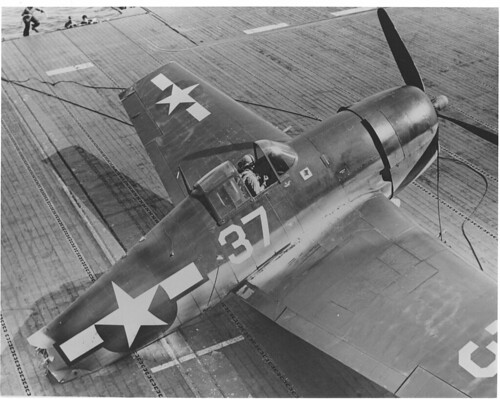
These are two different Hellcats, so clearly getting one’s tail torn off happened on more than one occasion. At least in the second case, things seem to have worked out all right.
2010-04-04
More war
Martin R, ever supplying me with MÖP material, a while back forwarded me a then new book from Gyldendal: Danskere i krig 1936–48 (Danes at war 1936–48), edited by Rasmus Mariager.
Finland and Norway have never doubted they did the right things during the Second World War, they fought against overwhelming force and acquitted themselves well under the circumstances. That Finland fought alongside with Nazi Germany is considered OK, since it was against bolsheviks. Sweden and Denmark have a more troubled relation to their history, was their collaboration with Nazi Germany necessary for survival or was it due to national spinelessness?
This book studies how Denmark was affected by the conflicts around the time of the Second World War through the examples of a few Danes who took part in these conflicts.
The first chapter is about Leo Kari, a volunteer on the Republican side in the Spanish Civil War. Now, Morten Heiberg’s text actually does not say very much about Kari, but rather discusses the political situation in Europe around the time of the war. Much of it was new to me, apparently sources unavailable during the Franco period are only now being explored, even if few eyewitnesses are left anymore.
The Spanish Civil War was a time of intense political manœuvring and positioning, with allegiances shifting over time. For example, at the time Germany and Italy were not yet formal allies, but rather rivals, so that Germany saw it fit to sell arms to the Republican side, partially in order to bring in some cash, but also so that the more numerous Italian forces on the Nationalist side would be, eh, culled. The side-effect that German participants might end up being shot with German weapons was an acceptable price. Since the Western Powers did not allow arms trade with Spain, all weapons had to be smuggled into the country, preferrably with the help of Greek merchants and ships. My reflection is that the enormous economic upswing this caused in Greece may have been an additional reason for the now-allied Germany and Italy to invade Greece some years later. The Spanish government’s arms purchases completely spent the Spanish gold reserve, which had been the fourth largest in the world.
The next chapter tells the story of Hans Fenger. When Finland was attacked by the Soviet Union in 1939 this caused dismay all over Europe and with surprising speed various help actions were organised. In Denmark many wanted to volunteer to fight on the Finnish side, but the Danish government decided this would be a breach of Danish neutrality and forbade its citizens to take part. Many managed to travel to Finland anyway, among these Fenger, even though he was an officer on active duty and thus formally guilty of desertion. Fenger travelled through Sweden to northern Finland where the various volunteers were organised and got initial training. In particular he had to learn to ski. Eventually he managed to get to the front where he got killed in his unit’s first skirmish. His body was brought home to Denmark and given a hero’s funeral. When the other Danish volunteers returned to Denmark everybody agreed to at most slap their wrists for their desertions, as they had after all defended the Danish national honour. Interestingly enough the authors Ahtola Nielsen and Kirkebæk seem to imply that Finland probably would have been better off acquiescing to the original demands by the Soviet Union than going to war to defend its territory, even though one would think that the fresh experiences at the time would have suggested this was not a sustainable strategy.
Mere weeks after the end of the Winter War, Denmark was invaded by Germany. Resistance being considered futile, Denmark capitulated with nary a shot. The Danish government then for several years continued a policy of not rocking the boat and trying to getting along with the occupational forces. This was by many felt to be humiliating and a blot on the Danish escutcheon. Paradoxically, this led to many enrolling in the German armed forces, to show that Danes could fight. In line with the policy of not giving the Germans any excuses for being dissatisfied with Denmark, Danish citizens, including military on active duty, were freely allowed to join German forces. The about 6000 Danes that did, did so for many reasons, not least of which was that signing up promised food for the day. Many professional soldiers joined up to get a chance to practice their métier and then there was a large contingent who politically aligned with Nazism, among those the subject of the next chapter: Per Sørensen. He was a Danish officer who joined the Waffen-SS and made a spectacular career before getting killed defending Berlin a few weeks before the end of the war. The authors Bundgård Christensen, Bo Paulsen and Scharff Smith point out that since all SS units committed war crimes, there is no reason to assume Danish SS members did not also do so, even though little documentary material on the Danish units exists. After the war, all Danes who enrolled in the German forces were retroactively declared criminal and in many cases sent to prison for longer or shorter periods.
A number of Danes, mostly those who were abroad at the time of the German invasion, but also a few who managed to escape from Denmark, joined Allied forces. Werner Michael Iversen was a Danish ex-soldier and merchant who acutely felt the necessity for Danes to join the fight and eventually liberate Denmark and thus worked hard at forming a Danish recruitment office in London and build up a Danish unit within the British Army. This was not entirely uncontroversial among exiled Danes in Britain, many who felt they should not get involved, not least to protect family members still in Denmark. Others agreed they should join up and many of these passed through Iversen’s recruitment office. The most promising ones were silently passed on to SOE to become secret agents in occupied Europe. Eventually though, not least due to Iversen’s abrasive and self-important personality, he was taken out of the loop and the recruitment office closed somewhat later.
After the war ended in Europe, grateful Danish volunteers offered to enlist in the British Army, at first to join the war in the Pacific, but after Japan’s capitulation wherever else His Majesty’s Government saw fit to use them. Britain hardly could refuse this gesture and out of about 11000 volunteers, 2500 were selected to serve in the British Army, most in various parts of Asia. Per Christensen was one of these. He ended up mostly serving on guard duty in the Far East, but other Danish units were used for policing in Palestine and India, both subject to civil unrest at the time. The Danish volunteers came home in 1948, when most had already forgotten about them in Denmark.
The final chapter by Ib Faurby puts all of this in context and how the foreign and defence policy of Denmark had been formed by its relations with Germany ever since the Napoleonic wars, Schleswig-Holstein being conquered and reconquered, but history eventually making Germany a Great Power and Denmark a small country that needed to keep good relations with its southern neighbour (Sweden by this time having dropped its traditional enmity with Denmark). Still, Danish volunteers have taken part in various wars and conflicts all through the 20th Century, shifting alliances causing the volunteers to sometimes fight alongside each other and later against each other.
So, what was my impression of the book? Well, it seems a slightly haphazard collection of various essays that did not necessarily form a coherent whole, and the use of select individuals (because they have left at least some amount of written material behind) as symbols of various subjects does not, in my opinion, work very well. Faurby’s wrapping-up chapter gives a much needed overview, unobscured by the minutiæ of the life stories of individuals. In the same way Heiberg’s overview of the context of the Spanish Civil war works well, and the few paragraphs about Leo Kari could have been easily excluded without losing any of the informative content.
The book ends in 1950, when Denmark joins NATO, as if Denmark just returned to its Sleeping Beauty status, but of course Danish volunteers have continued to serve in wars, now latest in Afghanistan.
Finland and Norway have never doubted they did the right things during the Second World War, they fought against overwhelming force and acquitted themselves well under the circumstances. That Finland fought alongside with Nazi Germany is considered OK, since it was against bolsheviks. Sweden and Denmark have a more troubled relation to their history, was their collaboration with Nazi Germany necessary for survival or was it due to national spinelessness?
This book studies how Denmark was affected by the conflicts around the time of the Second World War through the examples of a few Danes who took part in these conflicts.
The first chapter is about Leo Kari, a volunteer on the Republican side in the Spanish Civil War. Now, Morten Heiberg’s text actually does not say very much about Kari, but rather discusses the political situation in Europe around the time of the war. Much of it was new to me, apparently sources unavailable during the Franco period are only now being explored, even if few eyewitnesses are left anymore.
The Spanish Civil War was a time of intense political manœuvring and positioning, with allegiances shifting over time. For example, at the time Germany and Italy were not yet formal allies, but rather rivals, so that Germany saw it fit to sell arms to the Republican side, partially in order to bring in some cash, but also so that the more numerous Italian forces on the Nationalist side would be, eh, culled. The side-effect that German participants might end up being shot with German weapons was an acceptable price. Since the Western Powers did not allow arms trade with Spain, all weapons had to be smuggled into the country, preferrably with the help of Greek merchants and ships. My reflection is that the enormous economic upswing this caused in Greece may have been an additional reason for the now-allied Germany and Italy to invade Greece some years later. The Spanish government’s arms purchases completely spent the Spanish gold reserve, which had been the fourth largest in the world.
The next chapter tells the story of Hans Fenger. When Finland was attacked by the Soviet Union in 1939 this caused dismay all over Europe and with surprising speed various help actions were organised. In Denmark many wanted to volunteer to fight on the Finnish side, but the Danish government decided this would be a breach of Danish neutrality and forbade its citizens to take part. Many managed to travel to Finland anyway, among these Fenger, even though he was an officer on active duty and thus formally guilty of desertion. Fenger travelled through Sweden to northern Finland where the various volunteers were organised and got initial training. In particular he had to learn to ski. Eventually he managed to get to the front where he got killed in his unit’s first skirmish. His body was brought home to Denmark and given a hero’s funeral. When the other Danish volunteers returned to Denmark everybody agreed to at most slap their wrists for their desertions, as they had after all defended the Danish national honour. Interestingly enough the authors Ahtola Nielsen and Kirkebæk seem to imply that Finland probably would have been better off acquiescing to the original demands by the Soviet Union than going to war to defend its territory, even though one would think that the fresh experiences at the time would have suggested this was not a sustainable strategy.
Mere weeks after the end of the Winter War, Denmark was invaded by Germany. Resistance being considered futile, Denmark capitulated with nary a shot. The Danish government then for several years continued a policy of not rocking the boat and trying to getting along with the occupational forces. This was by many felt to be humiliating and a blot on the Danish escutcheon. Paradoxically, this led to many enrolling in the German armed forces, to show that Danes could fight. In line with the policy of not giving the Germans any excuses for being dissatisfied with Denmark, Danish citizens, including military on active duty, were freely allowed to join German forces. The about 6000 Danes that did, did so for many reasons, not least of which was that signing up promised food for the day. Many professional soldiers joined up to get a chance to practice their métier and then there was a large contingent who politically aligned with Nazism, among those the subject of the next chapter: Per Sørensen. He was a Danish officer who joined the Waffen-SS and made a spectacular career before getting killed defending Berlin a few weeks before the end of the war. The authors Bundgård Christensen, Bo Paulsen and Scharff Smith point out that since all SS units committed war crimes, there is no reason to assume Danish SS members did not also do so, even though little documentary material on the Danish units exists. After the war, all Danes who enrolled in the German forces were retroactively declared criminal and in many cases sent to prison for longer or shorter periods.
A number of Danes, mostly those who were abroad at the time of the German invasion, but also a few who managed to escape from Denmark, joined Allied forces. Werner Michael Iversen was a Danish ex-soldier and merchant who acutely felt the necessity for Danes to join the fight and eventually liberate Denmark and thus worked hard at forming a Danish recruitment office in London and build up a Danish unit within the British Army. This was not entirely uncontroversial among exiled Danes in Britain, many who felt they should not get involved, not least to protect family members still in Denmark. Others agreed they should join up and many of these passed through Iversen’s recruitment office. The most promising ones were silently passed on to SOE to become secret agents in occupied Europe. Eventually though, not least due to Iversen’s abrasive and self-important personality, he was taken out of the loop and the recruitment office closed somewhat later.
After the war ended in Europe, grateful Danish volunteers offered to enlist in the British Army, at first to join the war in the Pacific, but after Japan’s capitulation wherever else His Majesty’s Government saw fit to use them. Britain hardly could refuse this gesture and out of about 11000 volunteers, 2500 were selected to serve in the British Army, most in various parts of Asia. Per Christensen was one of these. He ended up mostly serving on guard duty in the Far East, but other Danish units were used for policing in Palestine and India, both subject to civil unrest at the time. The Danish volunteers came home in 1948, when most had already forgotten about them in Denmark.
The final chapter by Ib Faurby puts all of this in context and how the foreign and defence policy of Denmark had been formed by its relations with Germany ever since the Napoleonic wars, Schleswig-Holstein being conquered and reconquered, but history eventually making Germany a Great Power and Denmark a small country that needed to keep good relations with its southern neighbour (Sweden by this time having dropped its traditional enmity with Denmark). Still, Danish volunteers have taken part in various wars and conflicts all through the 20th Century, shifting alliances causing the volunteers to sometimes fight alongside each other and later against each other.
So, what was my impression of the book? Well, it seems a slightly haphazard collection of various essays that did not necessarily form a coherent whole, and the use of select individuals (because they have left at least some amount of written material behind) as symbols of various subjects does not, in my opinion, work very well. Faurby’s wrapping-up chapter gives a much needed overview, unobscured by the minutiæ of the life stories of individuals. In the same way Heiberg’s overview of the context of the Spanish Civil war works well, and the few paragraphs about Leo Kari could have been easily excluded without losing any of the informative content.
The book ends in 1950, when Denmark joins NATO, as if Denmark just returned to its Sleeping Beauty status, but of course Danish volunteers have continued to serve in wars, now latest in Afghanistan.
2010-04-03
So it seems…
| You are a Social Liberal (73% permissive) and an... Economic Liberal (16% permissive) You are best described as a:
Link: The Politics Test on Ok Cupid |

2010-04-02
Veckans ord: påskärring
På det hela taget låter det amerikanska “bag lady” bättre än det brutalsvenska ”påskärring”.
2010-04-01
Packet pigeons
RFC1149 is a well known April 1st joke on data communication via carrier pigeon, but of course you can't have a standard proposal just lying around without a test implementation, which the Bergen Linux User Group has done.
2010-03-29

2010-03-28
Living in a 2D world
The archetypal way of advertising 3D monitors is by showing an object protruding past the frame of the monitor:

The problem is that this is the one thing you just can’t do on current 3D monitors—the entire effect is dependent on two images being displayed (simultaneously or in close succession, depending on the exact technology) on the monitor. Outside the frame there is nothing to display, so no image, and no 3D effect. For the best effects you want the viewers watching the image from straight ahead (not way off to the side, as shown in the pictures) and towards the centre of the screen, without moving their heads too much. That way you minimise the perspective distorsions, out-of-focus images and perceptual artefacts by the borders, where the stereoscopic effect breaks down.
But of course, in a printed image, how else would you indicate that there is something special with the screen—directly photographing the stereoscopic image would just show a non-marketable blur. (This also means that the resolution in the print image often enough has no relation whatsoever with the actually achievable resolution on the screen.)
Moral: check out the items in person, don’t go by the pictures.
The problem is that this is the one thing you just can’t do on current 3D monitors—the entire effect is dependent on two images being displayed (simultaneously or in close succession, depending on the exact technology) on the monitor. Outside the frame there is nothing to display, so no image, and no 3D effect. For the best effects you want the viewers watching the image from straight ahead (not way off to the side, as shown in the pictures) and towards the centre of the screen, without moving their heads too much. That way you minimise the perspective distorsions, out-of-focus images and perceptual artefacts by the borders, where the stereoscopic effect breaks down.
But of course, in a printed image, how else would you indicate that there is something special with the screen—directly photographing the stereoscopic image would just show a non-marketable blur. (This also means that the resolution in the print image often enough has no relation whatsoever with the actually achievable resolution on the screen.)
Moral: check out the items in person, don’t go by the pictures.
2010-03-19
2010-03-12
2010-03-07
Saturday Night Special
We were so pleased with our previous visit to Utö that we already then decided we’d return in the wintertime and booked an Archipelago Weekend.
Saturday morning broke with brilliant sunshine from a cloudless sky glittering on fresh snow and we got out the door in high spirits. This time of year there is no ship connection all the way from Stockholm to Utö, instead we had to take the train to Västerhaninge, make a quick sprint to bus 846, which is supposed to leave at the same time as the train arrives at the station, and continue on to Årsta Brygga. Waxholm II was waiting for us at the jetty.
 Ice and snow.We crunched our way through a channel of broken ice, passing very secret military installations and a couple of deer running on the ice without any Bambi problems and soon were at Utö.
 Summers are short: Presumably a bird was flying by just as the tree was growing, so that it had to give way.When we had checked in and checked out our spacious (though still rather cold, as the season had just started) room we went out for a walk. The little group of houses by the harbour, shops closed for the winter, was soon behind us and we found ourselves in a forest where, when we stopped, all that could be heard was little clumps of snow falling off branches and the wind like the sound of a train in the distance.
 This is not your father’s spinach soup.Eventually we were hungry enough that we returned to the inn and a delightful lunch. After lunch we trudged in the snow up to the old windmill and then across the island to the nearby swimming cove. When we returned we found we’d covered two kilometres in as many hours. We decided it must have been good exercise. We returned to our room to dry our snowy clothes and rest a bit. We saw an episode of Merlin and groaned and moaned at the anachronisms and the hackneyed dialogue. The reason for Honeybuns’ big bag was made clear to me as she changed for dinner. I felt very scruffy in comparison.
The dinner was every bit as excellent as the lunch, and specially made for us. We got our favourite corner table where we could look out over the sea and see the lights of the mainland in the far distance. After dinner we sat in the big leather sofas in the lounge and read the books we’d brought. Eventually we walked and slipped down the hill under the starry sky to our room, where we soon fell asleep.
 These days, mooring your sailboat requires not just electricity but also WLAN.The morning was overcast and foggy but we got up early for breakfast and dawdled an hour or two over it. Then we went to explore the harbour and the road in the other direction. Another excellent bespoke lunch, with ingredients we’d never seen in combination before and then we had an hour to relax before our ship came in. This day the sound as it moved was slushier.
On the way we passed what seemed to be the carcass of a yearling elk on the ice, picked at by ravens. At least they would not have to starve for a while.
Saturday morning broke with brilliant sunshine from a cloudless sky glittering on fresh snow and we got out the door in high spirits. This time of year there is no ship connection all the way from Stockholm to Utö, instead we had to take the train to Västerhaninge, make a quick sprint to bus 846, which is supposed to leave at the same time as the train arrives at the station, and continue on to Årsta Brygga. Waxholm II was waiting for us at the jetty.
 Ice and snow.
 Summers are short: Presumably a bird was flying by just as the tree was growing, so that it had to give way.
 This is not your father’s spinach soup.
The dinner was every bit as excellent as the lunch, and specially made for us. We got our favourite corner table where we could look out over the sea and see the lights of the mainland in the far distance. After dinner we sat in the big leather sofas in the lounge and read the books we’d brought. Eventually we walked and slipped down the hill under the starry sky to our room, where we soon fell asleep.
 These days, mooring your sailboat requires not just electricity but also WLAN.
On the way we passed what seemed to be the carcass of a yearling elk on the ice, picked at by ravens. At least they would not have to starve for a while.
2010-03-05
Today, 67 years ago — V
My copy of Friday’s paper is incomplete, but here are some of the news reported:
A reaction I've had when reading these old papers is that news travelled surprisingly fast—reports from the other end of the Earth are there in the next day’s paper, implying that transoceanic phone cables remain active in spite of the war or that news bureaus have access to radio communications. Very little effort is spent on layout: the news items wrap around the ads, necessitating a search for where on the page a broken column continues, with no visual indication thereof. Many articles are pseudonymous, even though most readers presumably know who’s behind the signature.
- Japanese troop transports en route to New Guinea have been sunk with horrendous losses of life in the Battle of the Bismarck Sea. [To make sure that no Japanese soldiers would get to their destination, US ships were ordered to machine-gun survivors in the water.]
- The thaw is turning the Eastern front to mud. German troops are encircling a Soviet army near Charkov, but Soviet forces are pushing back the Germans along the front from Ilmen to Orel. British commentators see this as a sign of the Germans pulling back forces in order to prepare for an Anglo-American invasion.
- Hard fighting continues in Tunisia.
- Both British night bombers and US day bombers have bombed German targets the previous day.
- While the German bomb raid against London was very limited, 178 people were killed when a woman stumbled in the stairs to an air raid shelter and the crowd rushing in from the street fell over her.
- Sweden harbours some 13000 refugees, of which 9000 from Norway.
- Professor Linkomies has managed to form a new Finnish government, which is presented. [This government would make several peace offers towards the Soviet Union during the following year, but Soviet counterdemands were deemed unacceptable.] Foreign editor Johannnes Wickman analyses the political situation Finland has ended up in, rather critically. Having aligned with Nazi Germany is not an optimal choice.
- The tradition of called-up conscripts turning up dead drunk must stop.
- Zarah Leander’s Berlin house has been bombed and she moves back to her manor in Sweden.
- Nancy and Sluggo continue their metall collecting—even in the haunted house. The mountain lion turns on King’s would-be saviour, a shot is fired…
- LM Ericsson’s burglar alarms automatically call the police.
A reaction I've had when reading these old papers is that news travelled surprisingly fast—reports from the other end of the Earth are there in the next day’s paper, implying that transoceanic phone cables remain active in spite of the war or that news bureaus have access to radio communications. Very little effort is spent on layout: the news items wrap around the ads, necessitating a search for where on the page a broken column continues, with no visual indication thereof. Many articles are pseudonymous, even though most readers presumably know who’s behind the signature.
Veckans ord: matochist
Jag äter gärna kryddstark mat även om det gör ont i munnen, jag är matochist.
2010-03-04
Today, 67 years ago — IV
The pick of the day’s news:
- Luftwaffe attempts a raid against London in retaliation for the “Jewish air terror” the night before, but are forced back by intense AA fire.
- Hitler has proclaimed that all Jews in Europe will be finally exterminated. Das Schwarze Korps considers this a just punishment for the Jews having started World War I.
- German troops have retreated at Demyansk and Rzhev faced with overwhelming numerical superiority. German forces however advance at Slavyansk. The Germans also retreat in Tunisia, chased by British troops.
- The Royal Navy has built 900 ships since the beginning of the war, reports First Lord of the Admiralty Alexander. US Secretary for the Navy Frank Knox warns that the US Navy has to expect personnel losses of ten percent.
- Only 10% of the Swedish people expect the war to last two more years. Axis propaganda argues that time is on their side, as the Allies surely cannot hold out much longer.
- Hakkila was not able to form a government either, now Edwin Linkomies gets the chance.
- Touched by the letter from the sailor’s widow, an anonymous donor gives a large sum to the National Fund for the Victims of the Sea War.
- Zarah Leander’s latest film Damals is a great success at its Berlin opening. Greer Garson receives an Academy Award for her role as Mrs Miniver. [Her acceptance speech was the longest ever at 5:30 minutes.]
- Svend Asmussen has been forced to cancel his tour in Sweden as he has been denied an exit visa. His orchestra has received their permits, but won’t leave without him.
- Burglars have attempted to steal clothes at Helgagatan 36 but been frightened and left with only a pair of boots.
- 70 participants have already registered for Vasaloppet the following week. [In 2010 the number of participants is 56000.]
- Nancy and Sluggo continue to steal scrap metal on behalf of the war effort. King realises his gun is unloaded but one of the suspicious-looking figures from before turns up at the last moment with his rifle.
- Cederroths introduce delicious Cedrox carrot flakes.
2010-03-03
Today, 67 years ago — III
The pick of this day’s news:
- RAF bombers have undertaken the largest raid yet against Berlin. No Swedes have been injured.
- German and Soviet forces both advance on different front segments. Likewise both Allied and Axis forces gain smaller victories on the North African front.
- Italian troops are brought home from the Eastern front. On the other hand up to 2 million Italian workers are to be sent to Germany to work in the war industry.
- The leader suggests that Social Democratic arguments for the necessity of German troop transports through Sweden are disingenious and that said transports should be stopped immediately.
- In a surprise development Speaker of the Parliament Väinö Hakkila will establish the new Finnish government. The issue of a separate peace in Finland is a hot topic everywhere except in Germany, where the mere idea of an ally throwing in the towel is unthinkable. [Finland fought on for another 18 months before being forced to sue for peace.]
- HMS Sussex is reported to have sunk an enemy tanker [the German supply ship Hohenfriedberg] but could not stay to pick up any survivors due to intense U-boat action.
- A rally in support of European Jews has been held in Madison Square Garden. A treaty has been signed between Great Britain and Bulgaria, allowing 8000 Bulgarian Jews to emigrate to British Palestine. [This emigration does not seem to have taken place.]
- 150 Norwegian political prisoners are transported to Germany. [At least the ones mentioned by name did survive their ordeal.] A dozen persons hijacked a Norwegian passenger ship and set course for Britain, but were sunk by German aircraft.
- Japanese POWs riot, 48 are shot to death.
- The parliamentary savings commission suggests a number of points where public expenses may be decreased. The commission even dares question alcohol rationing, the bookkeeping of which costs 2.5 MSEK a year.
- A “picture telegraph” connection between Stockholm and New York has been inagurated, minimum cost is 300 SEK per picture. (Remember: that’s about the price of a radio set.)
- A Siemens electron microscope has been ordered for Uppsala University for the study of viruses.
- Mahatma Gandhi breaks a 21-day hunger strike, yet without having been released from prison.
- Alexandre Yersin, discoverer of the plague bacillus, has passed away at the age of 90.
- KSAK collects money for the upkeep of an orphanage for the children of killed Finnish flyers.
- The stormy weather has caused many accidents and fires and several trains have been damaged and railways blocked by fallen trees and debris.
- Due to the unsteady weather conditions, waxing has been an issue in the recent ski competitions in Östersund: “Waxing is a problem and seems to remain so until skis are made of some new and so far unknown material.” [Well, even with modern materials, correct waxing is paramount in competitions.]
- The telephone exchanges in Bromsten and Spånga will be replaced by automatic units later in the week.
- Nancy continues to collect scrap metal and the mountain lion finally jumps at King.
- A.-B. Aerotransport proudly proclaims their role in getting the national football team to Berlin the year before.
- Ragnar Frunck is already at it’s classic address at S:t Eriksgatan, but hasn’t begun selling saunas yet. Bahco on the other hand present a kit for turning your bathtub into a sauna.
- Buy the photo-copying machine Rectophot from Oscar Sundin.
Subscribe to:
Posts (Atom)
