2006-09-08

Aircraft painting as a co-evolutionary process

The first aerial kill is said to have been a Aviatik B.1 shot down by Frantz and Quenault in a Voisin III on 1914-10-05.

However, I am not aware that it has been recorded who was the first victim of aerial “friendly fire”, but apparently this was soon a problem. The Royal Flying Corps entered the war with completely unmarked aircraft, but it was obvious within days that some kind of distinguishing mark was necessary, so the Union Flag was sewn or painted on the aircraft. It soon transpired that under bad visual conditions the cross shape was easily confused with the Austro-German insignia, the Iron Cross* , so in October 1914 RFC adopted the French cockade , but with reversed colours . (The American Expeditionary Force first used yet another permutation of red-white-blue cockade but eventually introduced a star in a roundel .)

This change of national insignia is an example of character displacement—originally similar species evolve diverging characters in order to minimise competition, which is beneficial to both species. Now add to this cryptic colouration, i e camouflage.

Aircraft have the joint need to be cryptic both in the air (which, as we know, actually very seldom is as blue as the sky) and on the ground, which requires various compromises. An interesting point to note is that the light bluish or greyish undersides that are supposed to make the aircraft more difficult to spot in the air, also serve to make them more difficult to see on the ground, as the increased reflection of light decreases the contrast of the shadows underneath the aircraft. Many animals which spend their time lying on the forest floor also have this kind of colouration.


Paradoxically, while camouflage has as one purpose concealment, it secondarily is also a distinguishing character. So, just as for national insignia, the painting of aircraft went from mainly just doped tissue to distinguishable camouflages. During the first world war, RFC camouflage was soon very strictly standardised on a simple scheme: khaki on top, doped linen underneath , while the German Luftstreitkräfte used several different camouflages in parallel with multiple variations on the themes. The most characteristic was the quite complex “lozenge” camouflage . The other main alternative was the multi-coloured large-field wavy pattern that was also used by the French and Belgian air forces as well as the American Expeditionary Force and indeed has been the pattern for aircraft camouflage up to fairly recently, but everybody has been using different colours, which may help in the identification of friend or foe task.


During the between-the-wars period camouflage was eschewed—looking good on airshows was more important than concealment—but by the Second World War camouflage was on again.

However, as soon as the war started the need for rapid identification of aircraft in the air returned and camouflage was compromised by brightly coloured areas in many variations over the course of the war.


In Europe, modifying national insignia for recognition purposes was not necessary, as that had been sorted out the first time around, though changes were made, to improve camouflage (what was left under yellow, white and red sheets of colour) to simplify the painting process or to match changed allegiances.

But, meanwhile in the Pacific all involved air forces had a red circle in the centre of their national insignia , also causing a number of friendly-fire incidents. I do not know if the Japanese even considered modifying their markings, but they did not have to, as the British and United States forces quickly changed theirs. The British simply removed the central red circle from the national insignia . The US Army Air Force did remove the central red dot from their star insignia, but felt that the remaining roundel shape still was not sufficiently distinct from the Japanese roundel. A young draughtsman came up with the idea of adding horizontal bars on both sides of the star, creating the familiar “star-and-bars” . Later on in the war, British units in the Pacific added the bars to their insignia as well .

After the second world war there have been various swings back and forth between camouflage and colourful markings, but beginning in the 1980s most major air forces have moved to “low-visibility” markings, monochrome, low-contrast versions of national insignia intended not to compromise the camouflage, which in turn is almost universally all-round grey
.

Predictions one can make based on this minimisation of distinguishing marks are that visual spotting of aircraft is as important as ever in spite of radar and IR sensors but that identification of friend and foe is not made visually. This suggests both the existence of electronic situation-awareness aids as well as a relatively low number of few aircraft in the air simultaneously, making it easier to keep track of who's who and possibly also that close-quarters dog-fighting is not very common these days.


*For some reason the Iron cross is often referred to as a Maltese Cross. It is not. It is a Mantuan cross. This is a Maltese Cross: .

2006-08-20

Strange music

ABBA are of course a popular band to cover, and to me the most fascinating version is the album recorded by Salma and Sabina in Hindi. I just felt I had to listen to them again and googling around came upon unexpected music collected by April Winchell. Not only does this contain the craved ABBA covers (the good ones in Hindi, as well as some absolutely horrid ones by tone-deaf Germans), but Beatles songs by, among others, Alvin and the Chipmunks, a number of versions of “Stairway to Heaven”, and other more or less amusing audio disasters or just funny songs.

2006-08-19

Audible science

A little background: I used to work with the VR Cube at KTH. It was a device for real-time wrap-around computer graphics, and was on a platform almost three metres above the floor. One of the projects I worked on was the sonification (turning into sound) of molecular dynamics simulations. I never got very far for various reasons, one of them simply the lack of good tools compatible with the graphics environment. In particular I remember one time when I tested an audio library I had found and just set the mapping to some random values to see (hear) what would happen, walked into the Cube, closed the movable front screen, and ran the program. Accidentally I had found the Sound That Causes Panic and was playing it at a very high volume. In my desperate attempt to shut it off I almost ran the wrong way, through the back screen where only the concrete floor far below would break the fall. Luckily I caught myself just in time, turned and got out through the door instead to press Ctrl-C (tricky when your hands are over your ears).

Ben Goldacre at Bad Science has dug up several sonifications that do not cause panic and the commenters chime in with several more.

2006-08-18

The world gets a little sadder every day


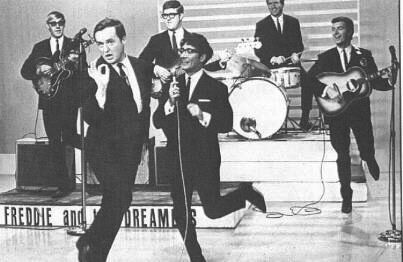
Nattsudd in its first incarnation was a surreal TV programme with bizarre clips of long-forgotten artists. One night they showed a grainy clip of a 1960s rock band, the members seemingly middle-aged gentlemen in suits, ties and horn-rimmed glasses, doing some kind of spastic aerobics while singing "You were made for me" in unembarrassed falsetto. Clearly they were having and making fun of the entire rock band thing. This was Freddie and the Dreamers.

While I have their music, they, if anyone, must have been best experienced live so I got the idea to search for them on YouTube and indeed there were several wonderful clips there but also the sad news that Freddie had passed away earlier this year, barely old enough to be retired.

Let us remember him and the other Dreamers yet awhile by watching the videos and visiting the fan sites.

2006-08-16

Structure and Interpretation of Computer Programs

The cover of Structure and Interpretation of Computer Programs by Abelson and Sussman
The first full university course I taught was Structure and Interpretation of Computer Programs. This was an introductory course in Computer Science. Back in those days, it was still considered a good idea that the students should have a good grounding in all the major programming paradigms rather than merely learning to program in Java, so a Lisp-based course which covered functional, imperative, object-oriented and logic programming, interpreted and compiled programs, was just the thing.

Furthermore, the lectures were done on video by Hal Abelson and Gerry Sussman, so I did not actually have to lecture myself. I was there to answer questions, go through the exercises and in general help out. This was something I enjoyed and I made the most of it. Not only had I read the book and seen the film, but the preceding summer I had entirely unexpectedly actually met Abelson and Sussman during a visit to MIT and gotten their autographs. I had also bought the T-shirt. I wore this the first lecture, certain it would make an impression on the students, and all during the rest of the course I tried to match my clothing to the subject of the day.

Now, one of my students from those days mailed me to tell me that the video lectures have been put online. So download them, watch them and see what a really good introductory CS course can be like.

2006-08-15

Visible science


Way back when, when I had the privilege of being taught medical engineering by leading physicians at various Stockholm hospitals, one of the things you would find in all medical research departments was a huge wall chart titled “Biochemical Pathways”. This showed the chemical interactions in living organisms (primarily humans, I assumed).

You may remember the Prime Radiant displaying the Seldon Plan in such a way that the equations themselves formed a visible representation of the plan, where it was heading, the deviations from the intended path and the corrections performed. This was much the impression I got of “Biochemical Pathways”.

I was proud and humbled by the effort that had gone into finding all this out, especially when I found the Citrate Cycle, that I had spent so much effort to learn and, superficially, understand, as a small area slightly right of centre, towards the bottom. I was also excited by the knowledge that this was work in progress, every year more information about biochemistry would be found out, adding to what was already there, making the map ever more complex. And in particular that this knowledge was there as a physical map you could look at and study, rather than just an abstract collection of research papers. (Not that I then fully understood the concept of research papers, but I did vaguely realise that research was somehow created and collected.)

I don't know if this wall chart actually was updated regularly and made available in new editions, or if it was a one-shot effort made at some specific time, but I've later found it was created by Roche Applied Science and, as far as I can tell, it is now long out of print. Maybe the sum total of our knowledge of biochemical pathways has grown so much that it no longer can be contained on a wall chart that will fit on the wall of a hospital research department.

It was thus with nostalgic joy I found that ExPASy have scanned the entire chart and put it online. Not only that, they have made all the enzymes clickable so that you can look them up in their ENZYME Data Bank to get references to papers referring to that enzyme, alternate designations, where it is expressed and other things I know too little of.

Probably ExPASy will not update the underlying graphics and network, but, oh, how I wish they or someone else would. Imagine putting that on a really big tiled display. And imagine that every new biochemistry Ph.D. would get to add their contribution to science to the Prime Radiant, so that they and others can see what they have done, and its relation to the vast expanse of what others have done before them.

2006-08-14

2006-08-13

2006-08-12

The Thatcher Legacy—higher public expenses

Simon Jenkins has written an article in the Guardian, quoting a study that shows how the privatisation of rail transport in the UK has led to HM Government having to pay more than three times the earlier national operating costs in subsidies to the “private” companies.

It would be quite interesting to see what a similar study would find about the privatisation of Swedish rail transport. The least it would find is that it certainly does not even operate as well as British rail— there still isn't a single site similar to National Rail that will tell you how to get from point A to point B regardless of operating company. In fact, the recommended method is to use the site of Deutsche Bahn to figure out how to get from Laxå to Gällivare!

And now 440 km of track is to be closed (and torn up?) because Banverket can't afford to maintain the track. It seems eminently stupid, both for environmental reasons and as flying is becoming more complicated anyway.

What is the Government doing about all this, I ask?

2006-08-10

Music reviews and history

Georgij Starostin maintains a huge site with lots of his irreverent, informative and incisive music reviews. They are highly enjoyable to wade through.

2006-08-09

The grandeur of lice

The creation myths I've heard really turn pale when compared to the breathtaking epic science tells of several milliard years of organisms living, interacting with other individuals, other species, changing and being changed by the environment, generation upon generation, event upon event, atomic level events affecting the development of macroscopic features, life spreading over, above and into the Earth. Of course, as a non-biologist, I only have a very general idea of the details of this story, but there are of course those who do and are in even deeper awe of the story of life.

Michael Suttkus describes the

…adventure story of struggles between the forming broadleaves and the dominant connifers in the Cretaceous, a romantic drama between plant and insect, a comedy as white-bracted sedges evolve flowers, drop the flowers, then evolve them all over again!

and then points out that flowers that naive persons would just look past also have gone through just as magnificient an evolutionary history, and indeed that lets the knowledgeable person be even more impressed by the amazing world we live in.

On this theme, Samir Patel writes in Seed Magazine how we may strive to protect endangered species that look special to us, such as the California condors, while ignoring or even actively extinguishing species just as endangered, because we consider them yucky, such as the California condor lice. Patel concludes, a bit sadly:

…perhaps, in some sense, a California condor without its lice is not quite a California condor.


Darren Naish shows in two articles on parasite-host relationships and co-evolution that this is very literally true.

So, treat those icky bloodsuckers with the respect they are due.

2006-08-08

I try to be a Good Person

So I had a meeting in Brussels.

I'm always concerned, and this time I was concerned about the effect a flight down would have on global warming, so I decided to go by train. As usual, the DB site supplied me with the information on how to get to Brussels from Stockholm. It turns out to be possible to do it in around 20 hours with only two changes. Well then! I booked tickets and noted that in addition it would be about three times as expensive as flying as well. The sacrifices one has to make to save the planet…

Came the day and time, and I went to Stockholm Central Station with my backpack with some wholesome reading, other necessities and a towel. Us passengers were then treated to a Monsieur Hulot moment as we, just a few minutes before the train was due to leave, were directed from platform 11 to platform 10 and then to platform 8. We still managed to get on the right train in time and then we rolled off towards Copenhagen.

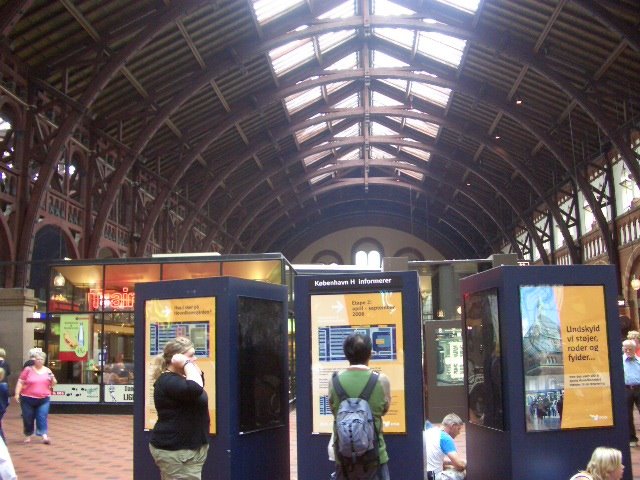
In Copenhagen, smoking was of course allowed inside the station, even in the restaurants. I used to think this was because Denmark was where the uncivilized South started but in the last few years smoking prohibitions indoors has become the norm all over Europe (more of which anon), except for Denmark. I believe they make a point of being as obnoxious as possible to prove they are not slaves to political correctness. Interestingly enough, the Danes are supposed to be the happiest people in Europe. Perhaps the secret to happiness is not giving a damn about others…

With time came the night train to Cologne. It was a very long train and the sleeper car turned out to be a double-decker, with my compartment up a few steps. Furthermore I found there was even a shower in the car. While this was good news, I wondered how much of the weight of the car consisted of water and how the changing distribution of that would affect the centre of gravity and the behaviour of the train. I will have to find out. Presently I was joined by a young Australian guy, who was on a Grand Tour of Europe. We had a good trip, the sun setting as we travelled southwards. When time came to go to bed, we couldn't figure out how to get the beds out and had to ask the conductor. The secret was that you had to have a key to unlock the system, but once that was done, we couldn't figure out how to fold back the beds. Magic.


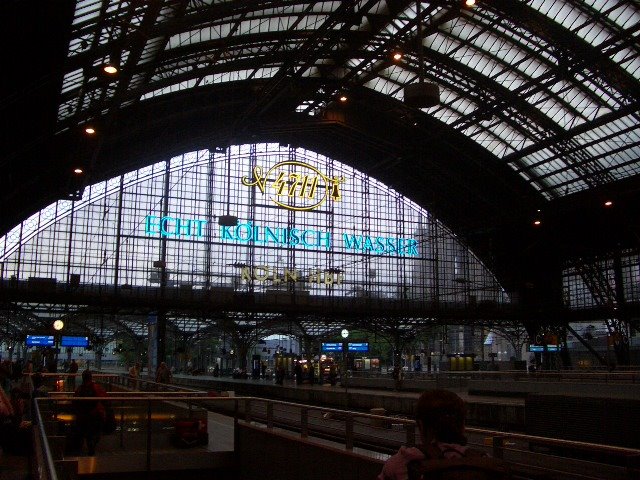
I don't sleep too well on trains, but the bed was OK, even if it might have been too short for some of my taller friends, and I dozed on and off until the conductor banged on the door the next morning. A quick shower and breakfast (even if it was croissant-based) as we rolled further through the Rhine valley. Graffiti like high-water marks on all buildings along the railway. Then Cologne. I cannot understand why, as the cathedral stands there just next to the railway station, the glass roof is merely translucent, so that the cathedral cannot be seen.


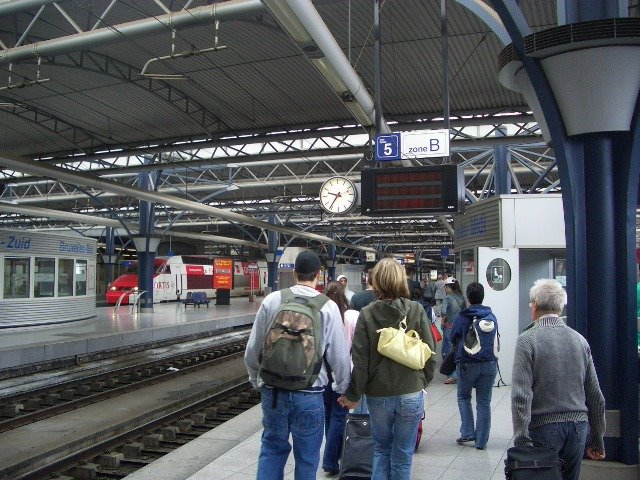
The final leg was a Thalys train to Bruxelles Midi/Brussel Zuid and on the way there we passed through the Ardennes, which was the scenic high point of the journey. Finally we passed through Brussels and I found myself in the labyrinthine innards of a large railway station. The food court was just opening for the day and I decided that brunch was in order. I often brag that I've never been disappointed in Belgian food and perhaps I should have sought out a more traditional restaurant because the Sunshine Burger I got at Quick Burger was just pathetic. As I lacked the support of a submachine gun, I didn't argue the matter, but simply vowed never the eat there again. I continued out onto the streets of Brussels, choosing a zigzaggy course towards my afternoon appointment. This took me through the EU quarters, where I could see many a cluster of lobbyists standing outdoors smoking, a clear sign that civilization is steadily encroaching on these parts of the world as well.


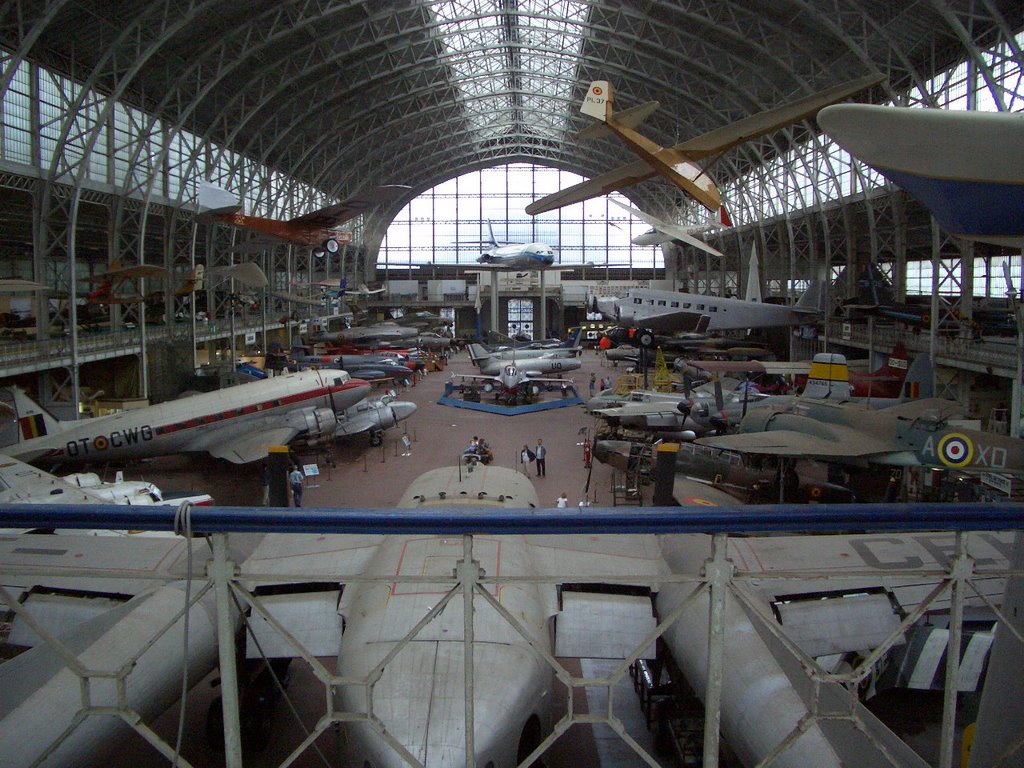
I sat in a park outside a big museum and read my book, until I decided to find somewhere to eat. Walking through the museum yard my eye was drawn by a glint of metal through a window, I went closer and by Jove—I had been sitting outside the Musée de l'Air for the last hour or so! I would return…

I had an uneventful lunch at a Sino-Cambodian restaurant. Nothing remarkable, but OK. Perhaps a bit on the expensive side though. I've always wondered about those who spoke so enthusiastically about “EU prices” as an argument for Sweden to join the EU—food prices are not and have not been necessarily much lower outside Sweden and, as in Brussels or Paris, can be considerably higher. I suspect the solution to the puzzle is that it was and is the alcohol prices that ever were the interesting quantities. And while that never has been an issue for me, I think that in the end is what most Swedes consider to be the most important point about belonging to the EU. As the booze price is not affected by your native currency, joining the EMU has in consequence not been a high priority.


The meeting went well, I think, and when it was over I walked with rapid steps back to the aviation museum. Entrance was free but I would have less than two hours in which to go through it. As I entered the large hall I was just dumbstruck. All these rare planes, not all Belgian, and lots of loose bits and pieces, dug out of the ground or found in workshops and warehouses, some under restoration, some just shown as they were. Wonderful! Wandering about in there was worth the entire trip for me. Such feelings of joy and buoyancy are seldom long-lived, so perhaps having to leave so shortly afterwards was optimal. I'm looking forward to returning, though.

While I had been in the museum, it had started raining and I realised that strolling around the city, as I had planned to do, was going to be a rather wet affair. Instead I took the metro to the city centre, wandered about a bit in the Princess' Gallery and then didn't quite know what to do. I noticed with some surprise that the bookstores I found, while gloriously stocked in comics, art and philosophy, did not seem to have any technical literature. Perhaps that is reserved for special bookstores out in the suburbs. Another matter to investigate.

In the end I just sat down, resting my legs and was befriended by (at least someone claiming to be) a homeless Palestinian, who told me of his adventures with the asylum system and the way the “first country” rule is enforced. It will be a surprise to absolutely no-one that I'm a soft touch, but really, I wish I could have done more than just tide him over a couple of days, and yet he didn't get more than I soon spent on dinner in a nearby restaurant.

After dinner I couldn't come up with anything better than getting myself back to the railway station and wait five hours for my train. It is often complained that airports are alienating and inhuman, but I'll say this: they are indoors and warm. Railway stations on the other hand are not necessarily either: one of my worst experiences was in Gävle, where I once had to wait four hours for a train in the middle of the night because SJ no longer can be bothered to run night trains from Stockholm. I had had a book with me, so I had feared no more than uncomfortable benches, but little did I expect the evil of privatisation. No sooner had I sat down, before a guard politely asked me to leave, as it was 22:00 and the station would close for the night. What? But I had a train to wait for! That, as it transpired, was no concern of Jernhusen who only operated the station and didn't give a damn about any trains. So there I ended up on the streets of Gävle, and let me tell you, by 02:00 the charm of the little town was rather absent. Luckily it was a warm spring, or I might have been found dead in a snow drift the next morning. Anyway, Bruxelles Midi did not actually close for the night, but nor was it very warm and inviting. In particular benches were difficult to find. I can (barely) understand it if fear of IRA bombs causes the removal of waste paper baskets even from the railway station in Needham Market, but why limit the number of benches? In the end I found somewhere to sit; coincidentally, next to a young Swedish girl. We had a long and pleasant talk, though I fear I as usual might have done the majority of talking, until she had to leave for home (in Brussels, that is). I still had a couple of hours before my train would come in, but read on in my book.


Finally I got on my train, not in a double-decker car this time, but a more traditional one. In the morning I found that we were running late; we arrived about an hour late in Hamburg and I had missed my connecting train. This seems to be a constant problem with Deutsche Bahn, they are always late and they're always a lot late. This time it wasn't too much of a problem as I got rebooked on a later train and would have enough slack in Copenhagen that I should not have any problems getting on my train to Stockholm. The railway station turned out to have a quite large bookstore and I spent some time browsing the shelves there. Here they definitely did have lots of nice books from Motorbuch Verlag, but I decided I didn't need any more books right then.

The next train was DSB-operated and therefore on the dot. To my pleased surprise this train got on the ferry from Puttgarden to Rødby, so I got a boat trip in the bargain. I got up on deck and stood in the sunshine watching enormous amounts of jellyfish in the sea. Is this normal for these waters or yet another sign of global warming?

In Copenhagen I got to the platform for the Stockholm train early and was alone, except for a junkie who was furtively struggling with finding a vein. I didn't quite know what to do but keep an eye on him. In the end he apparently got his fix and as he made his way away, I realised he was wearing painter's clothes, so possibly he worked at a construction site nearby. That is a bit worrying.

Anyway, I got on the train and later in the evening I got home, after three days on the road. Indeed it would have been cheaper and faster to fly, but lowering one's standards is probably going to be necessary for long-term survival, so perhaps I should get used to travelling by train. London can be reached in 30 hours or so, but is probably going to be horribly expensive. On the third hand, not travelling at all is of course the most environmentally conscious.

2006-08-01

Seek not for fresher fonts afar

Back in olden days, I enjoyed paging through the Letraset catalogue with pages upon pages of strange typefaces. Today, of course, all that can be found on the web. At Linotype you can search through their font catalogue and you can even write your own test sentence to see what it would look like in this or that font. This is Duc de Berry™:


On the other hand, if you already have a sample text and would like to know what it is (so that you can buy it, for example), Identifont will ask you lots of questions about what the characters look like and then suggest some fonts which may contain the one you are looking for. (It took 13 questions to get a set of 24 fonts which had Duc de Berry in tenth place.)

2006-07-29

Sådan är kapitalismen…

In the August issue of VI is an article by Elke Cronenberg about lobbyists in Brussels. It doesn't go all that far, finding that the connections between lobbyists and public servants are carefully kept opaque. Yet there is a very illuminating comment by Lena Ek*, MEP, who apparently has been talked into voting for relaxing the European substance testing legislation (REACH):

What do you say to a lone manufacturer of something as harmless as artificial raspberry flavouring? That she must run all the tests that are proposed now. How could she afford that? For a raspberry flavour?

Weeell… How do we know it is harmless unless it has been tested? (And we might of course not know even then, due to limitations in the testing procedure.)

As if prompted, Effect Measure writes about “popcorn worker's lung” (followup). Something as harmless as artificial butter flavouring destroys the lungs…


*See Lena Ek's own blogging on the matter.

As nerdy as it gets

Video combining Monty Python and Star Trek Classic, wonderful!

(Via Retrospectacle.)

2006-07-25

Making fun of people

Avigsidan has always been a reliable source of found misprints, malapropisms and mistranslations.

Now, for the spoken word, Salto Sobrius has found no less than two eavesdropping sites, Tjuvlyssnat in Swedish and Overheard in New York in US English.

From the latter, something that really should be sad, but for some reason made me laugh hysterically:

Amherst alum: So we're looking over the applications, and there are all these amazing kids. Won the Westinghouse, worked for the UN. And the questions: "Who do you most look up to?" "My parents, because they're immigrants, and they taught me to work hard." And with each of them it's like, "in". And then we get to this one, it's like, "What's a recent intellectually stimulating experience?" The answer is, "I love my dog, walking my dog." Stuff like that. On and on, really ridiculous. And then, "Who do you most look up to?" The answer: "my parents, especially my dad. He's the President of the United States." And we look at each other, and Steve is like, "in."


And just to have something aviation oriented, Airline Pilots Forum has a thread on the funniest thing heard over the radio. Somewhat lower standards with the best quote being:

A former Shorts pilot told me about flying a white painted Shorts "Skypig" with brown trim. His rock bottom day as a pilot was when ATC told traffic behind him to "follow the white Shorts with the brown streak."

2006-07-22

Finished model IV


A Ling-Temco-Vought A-7H Corsair II from the 345th squadron of the 115th Wing at Soudha Bay, Crete, c 1988. I'm gradually getting there with the airbrushing, but obviously I could do a lot better.

2006-07-20

Brave researchers!

I have just received and listened through Slaughterhouse by Tonesucker.

The courageous Onoma researchers have methodically gone through all the settings on the fuzz box and guitar amplifier and recorded what they sound like, so that we others don't have to.

The results, while less easy to dance to, are easy listening and the rest of the family didn't complain even once during the one-hour session.

Their website has a piece from another Tonesucker performance available for downloading.

2006-07-19

Oh, Small Cthulhu!


Cthulhu gets trapped in an alien world in Hello Cthulhu.

2006-07-18

State of the art in asteroid defence

Those who saw my earlier ideas about pushing asteroids may compare with how CNES want to handle it.

And BTW, isn't “Sample” an absolutely brilliant name for a science correspondent?

2006-07-15

The Imperial Symphonic Orchestra

The Imperial March performed with impeccable Dark Side Force.

Ute och cyklar…

My degree is in “human-computer interaction”, but I've never really liked the term, as computers are present in so many items we don't normally think of as computers, so I've tended to speak about human-machine interaction instead.

Today I was out biking and, as so often happens, I followed the signs and suddenly found myself in what seemed to be a cul-de-sac with no idea how to continue to my target. (In fact there was an exit further down the street, it just wasn't very visible.)

I found myself mumbling: “Is the appropriate action visible to the user?” And so it is: Nobody has performed a cognitive walkthrough of the bike lanes in Stockholm and that's why you so often end up in the wrong direction up a one-way street, on the wrong side of the road when the bike-lane is on the other side, etc. And indeed, it also indicated a weakness of cognitive walkthroughs as evaluative method—doing it on a map quite possibly would not have indicated how difficult it was to see the continuation of the street behind trees and houses, but would have required an inspection of the actual interface in action, so to speak.

So, maybe not even “human-machine interaction” is sufficiently descriptive and I should claim to work with human-artefact interaction.

2006-07-14

Flying under the radar

I have on occasion met Swedish Creationists and there have even been some instances of them sneaking in creationist teaching in private schools, but mostly I have assumed that they can be safely ignored as a harmless fringe phenomenon. So I was startled by Thomas Anderberg noting in a column in Dagens Nyheter that the Swedish National Agency for Education recently condoned teaching of "intelligent design" in a Christian high school. Lärarnas tidning has an article on the subject and Arbetaren also has noted this. These articles are worried if not upset. There also has been a debate on Yelah, which mostly has been sensible. The headmistress of the high school in questions defends herself in a debate article in Expressen.

I was myself sufficiently outraged to send a letter to the responsible councillor at SNAE, Ingela Gullberg, pointing out that this is yet another attempt to chip away at rational thought and that backing of "intelligent design" is a sign of such a lack of scientific understanding that it cannot be accepted in a teacher in a state-sponsored school.

You may also want to discuss the matter. The email address is firstname.lastname@skolverket.se.

I'm on a roll


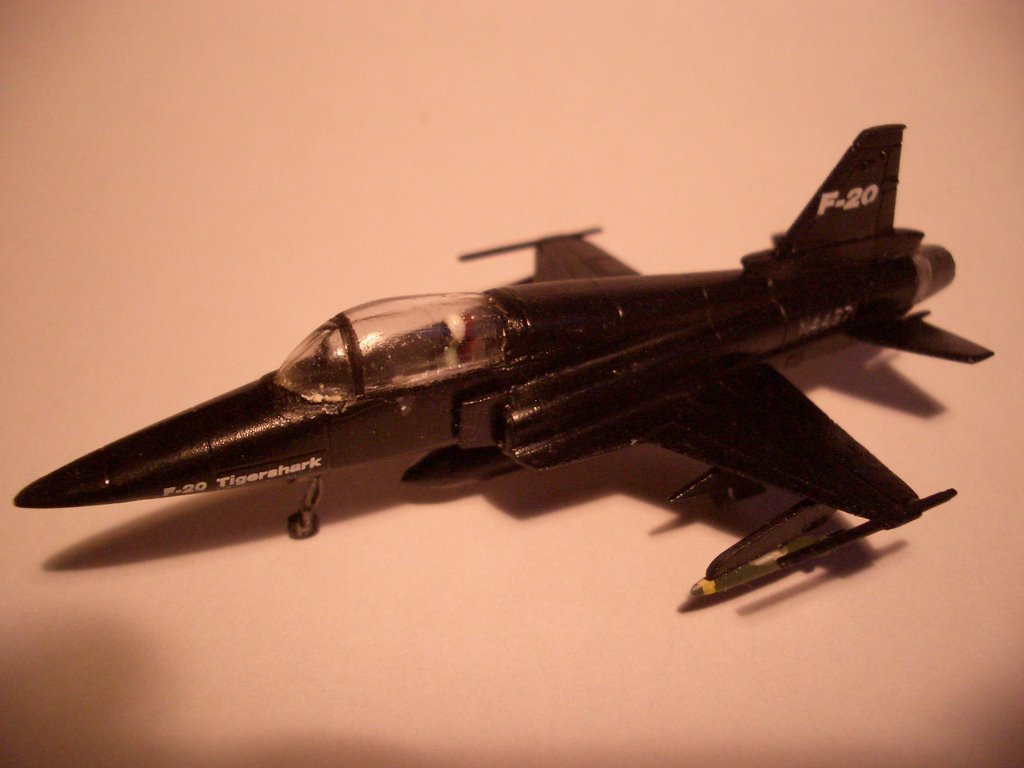
A Northrop F-20 Tigershark in factory demonstrator colours, ca 1983. Model from Airfix, scale 1/144. Awful crappy model…

2006-07-13

Repaint, the bend is nigh!

Disconcerted, I find myself on the side of Bill Gates. The bizarre US organisation Focus on the Family vow to fight against the Bill and Melinda Gates Foundation because they improve healthcare in the Third World, and that just happens to involve birth control as well. FotF claim to belong to those who believe endless population increase is necessary, though one suspects the real reason is that they are opposed to all birth control everywhere because sex should hurt.

Unfortunately, one cannot donate money to the Gates Foundation, but as I've argued before, a good start would be to support the population decrease in the First World.

2006-07-10

Another one done


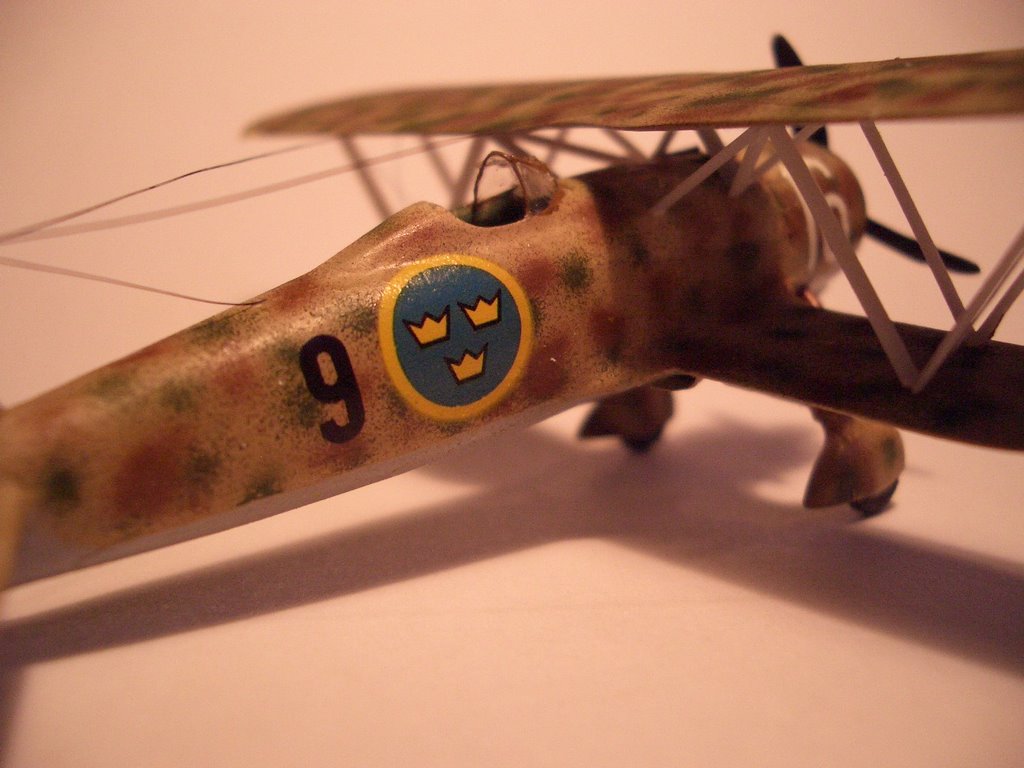
A J11 (Fiat CR 42) from 2nd Squadron, 9th Wing at Säve, ca 1941. Model from Plastiques Dermatt, scale 1/101.

Nobody loves a whiner

Occasionally I write reviews at Amazon. Reviewers get graded in turn on how “useful” readers consider their reviews to be and if many consider your reviews to be useful you go up in reviewer rank. I have no idea if you get any benefits whatsoever from being a high-ranked reviewer, but of course the competitive instinct reacts on any ranking numbers.

So, suspiciously I watched reviews where I did not get good marks and thought I saw a pattern. Hmm… Quickly, drag the numbers and drop them onto the nearest statistical analysis software. Yup, there is a weak (R2 = 0.26) but still statistically significant (p < 0.01) correlation between me giving high marks in my review and the review considered useful.

So, is it me writing worse reviews about the bad items, or do people for some reason react negatively to low marks? I should write a spider to go through a suitable sample of Amazon reviews and gather more statistics.

2006-07-07

Advanced Modeller's Syndrome

Anders Holst is disappointed:

[Bronco Models have released in 1/35 scale] German Octagonal Bolt! I've longed for this set and will probably buy ten or so. Still I feel a certain disappointment. I'd rather seen that they had been more specific and e g released Late War German Octagonal Bolt (Henschel). As it is I'll have to scratchbuild them.

2006-07-06

Who can you trust?

The just a few years ago unlikely partners Bengt Westerberg and Kjell-Olof Feldt have written a debate article, arguing that Sweden needs more privatised health care and education.

This hot on the heels of a study published in Health Affairs, showing that non-profit health care has both better quality and is cheaper than for-profit health care.

It is of course likely that the situation is radically different between the United States and Sweden. I'd like some exploration of the differences, which would also tease out more of the factors that actually affect the quality of care and the associated cost.

”…ett enda lallande trolldegsträsk.”

The school minister is proud of immigrant students who, in spite of their disadvantages, manage to get through elementary school in only five years While I do not want to begrudge the kids their success, I think it might give one pause for thought that it is even possible to start not knowing the language, not having gone to school before, and still learn enough to manage to graduate in half the nominal time.

I fear this means the demands placed on the students are very low indeed…

Update: And just after I wrote this, the Liberal Party publish a debate article demanding raised standards in school. Please, someone in the socialist bloc, make me not have to vote for the liberals!


Anyone who wants to translate the title, feel free to do so, I gave up.

2006-07-02

Another one passes on

As I write, the BAC Canberra flies its last flight at RAF Waddington. I am lucky to have heard and seen one in flight, many years ago at RAF Bruntingthorpe.

On the road

I have really only travelled in Sweden as an adult and then mostly for business, so while I am reasonably familiar with the university cities (many as they have become in later years), the rest of the country is unfamiliar to me.

So when the Stråhles offered a bus trip to the modelling exhibition Grevens Glue Galore in Motala, I eagerly tagged on. It took some hours to get there, but in these degenerate times, there are no longer any trains to Motala, and anyway, Mats and Lisa did their utmost to keep us passengers entertained. Well, we entertained ourselves as well - I and Lars B had a long discussion where we realised we had really no idea about the early history of Liberia. (When I later looked it up in Wikipedia, it was rather sketchily described, but I got the impression that it was as much colonisation and oppression of the indigenous peoples as what was performed by European nations.)

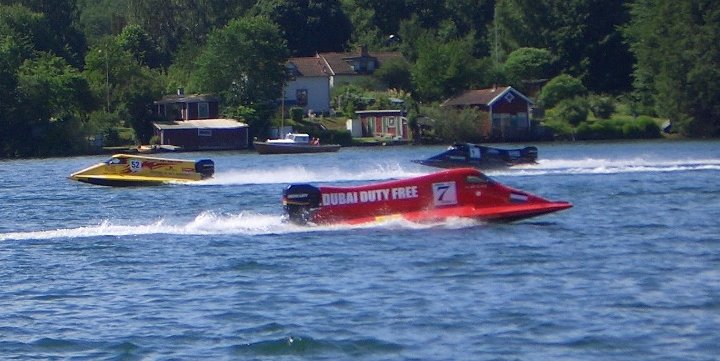
Anyway, once in Motala, we realised Vätternfestivalen was in full swing, with the currently noisiest activity being speed boat races in the bay, covering the harbour with the distinct smell of nitromethane. I must say, I find racing boats rather unæasthetic:
Racing boats on Vättern

I tried lunch at the Motor museum, which was not very exciting, foodwise. The museum itself was rather more interesting. It is not restricted to cars but is as much a nostalgia museum, with old film cameras, hundreds of old radio sets, chain saws and whatnot. Even I got reason to get teary-eyed at the sight of a perfectly preserved ABC 80, complete with audio cassette secondary storage:
A Luxor ABC 80 computer
Yep, once upon a time Motala was the centre of a thriving Swedish computer industry. That was in the days when you could actually fit a useful program into 16 kiB.

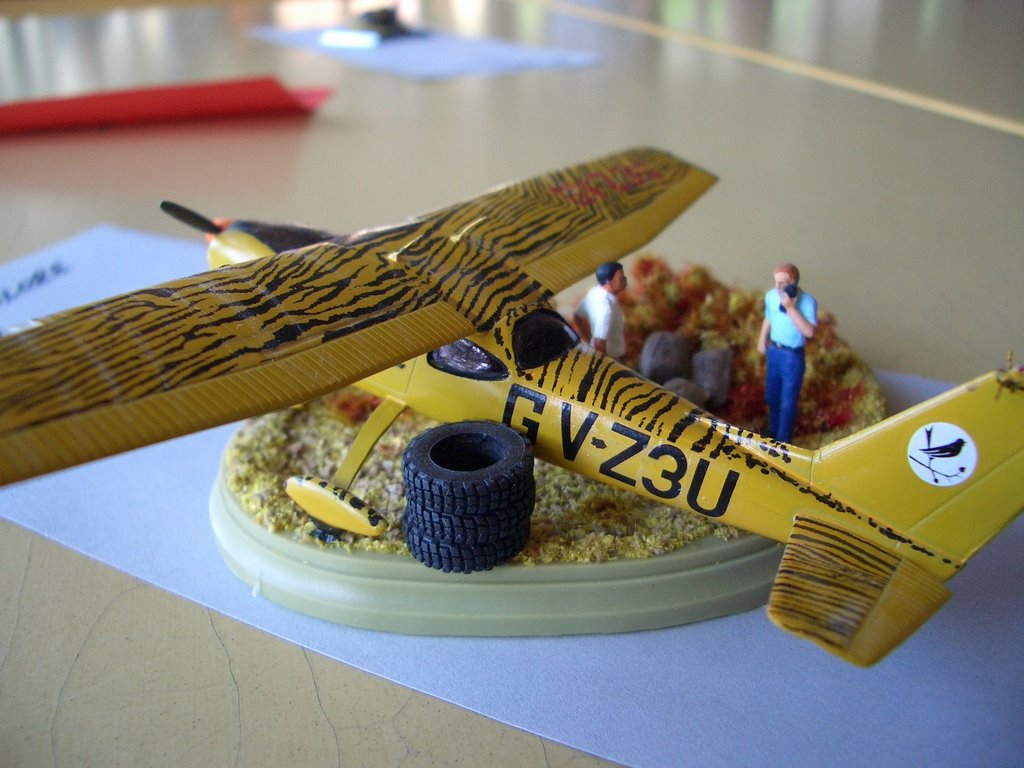
Then back to Folkets Hus, where close to 400 models had been exhibited, most of them cars, which tend to leave me cold. There were some very nice aircraft though, including a very stripy Cessna in 1/72:
A diorama with a Cessna 172

At the swap meet I wandered around chatting with sellers and aquaintances and somehow acquired, quite without intention, some very necessary tools and nice models.

Eventually it was time for handing out the prizes and I realised the friendly little man with the "Claes" name badge was the eponymous "Count". (He's really a baron, I think quite a few people have to die first for him to get the comital title.)

Many of the usual suspects won prizes and then it was time to carefully pack all the models for the transport back. I and Lars spent the way back discussing what British aircraft would have been used in Vietnam in an alternate reality. We decided the Buccaneer would have replaced the Skyhawk and dreaming on, went on to posit the development of a four-seat, body-widened Bucc for electronic intelligence and similar purposes, replacing the Prowler.

And then we got home.

Evil bastards

I've been getting comment spam, so I have enabled comment moderation. The management apologises for the inconvenience…